
Compare the riddle of Cleobulina, a didactic poet and author of enigmas and a contemporary of Sappho (7th century BC) with the riddle of the Sphinx and answer the questions surrounding the mythological character of Oedipus.
1.- Read the two riddles, the one by Cleobulina and the one by Sphinx, and try to give an answer.
a.- The father is one, the sons twelve and each of these
has twice thirty daughters of features twain;
some are white and others are black,
and though they be immortal they all perish.
b.- Which creature walks on four legs in the morning, on two legs at midday and on three legs at night?
2.- Which character appearing in the ceramics manages to give an answer to the riddle?
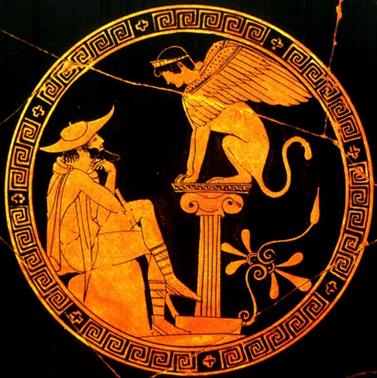
https://arte.laguia2000.com/wp-content/uploads/2014/03/Oedipus-Sphinx.jpg
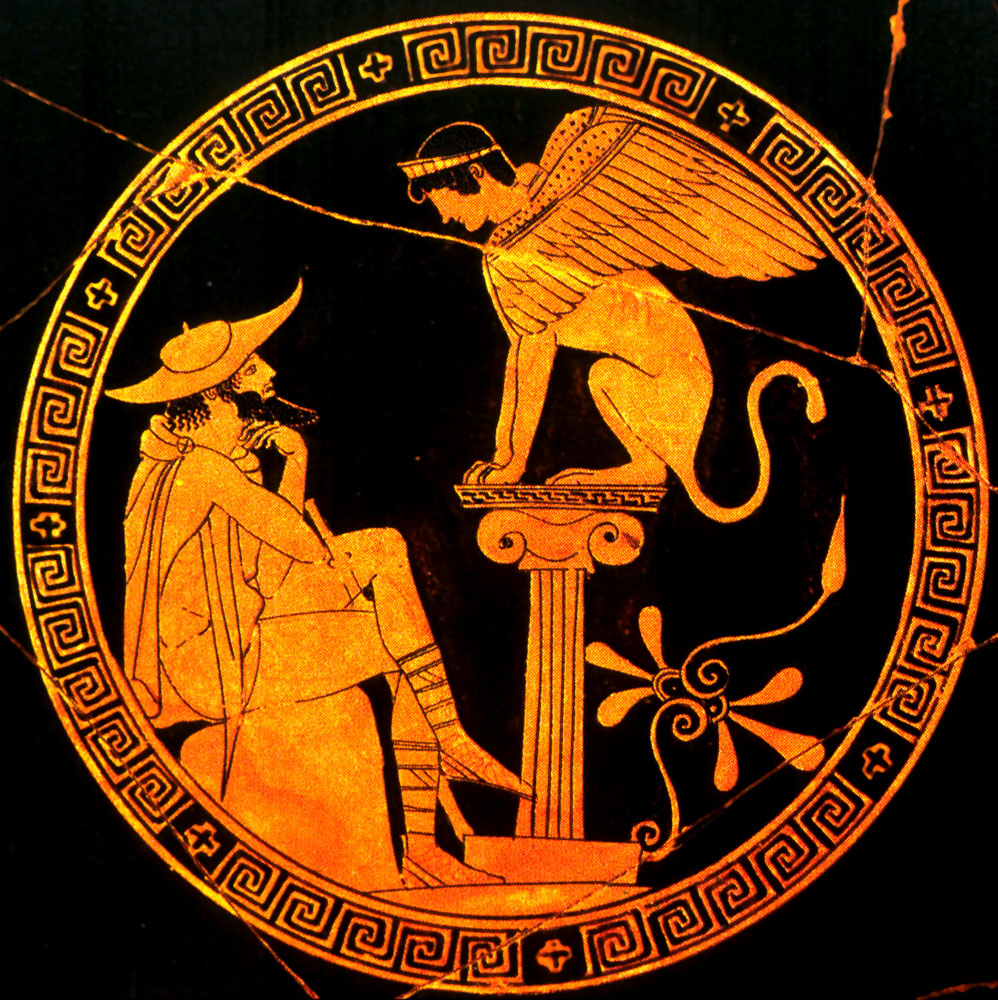
3.- In view of the ceramic painting, point out the three characteristics of the sphinx.
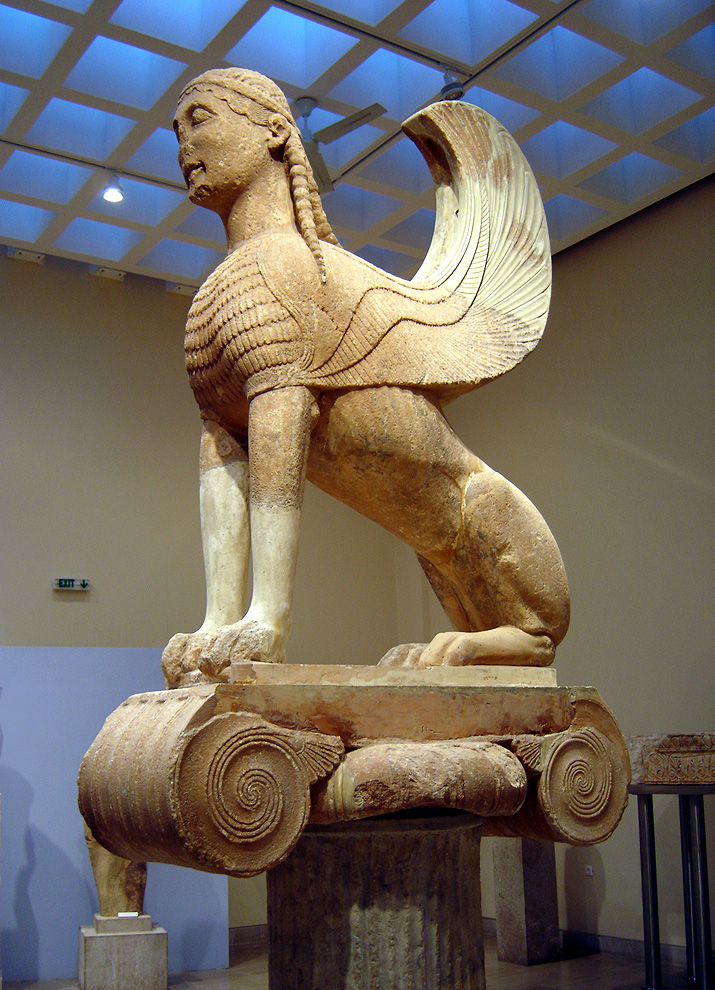
4.- Look at these two sculptures and indicate which one is a Greek sphinx and which one is Egyptian. Point out the differences and deduce which of them will be destructive and which will be beneficial.
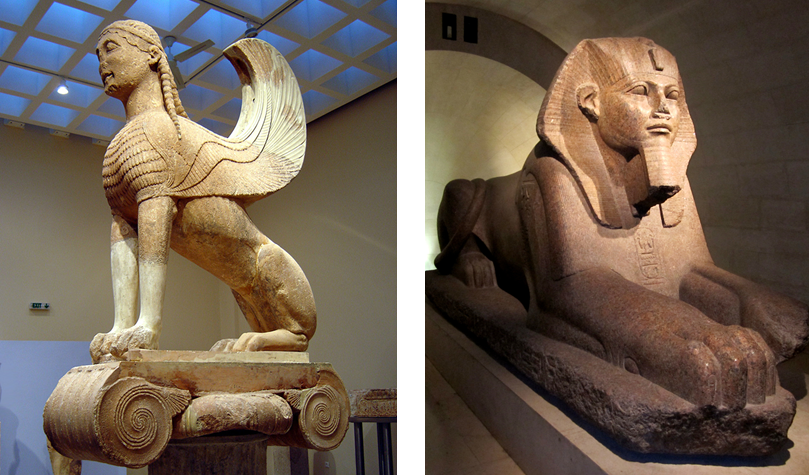
https://upload.wikimedia.org/wikipedia/commons/2/20/028MAD_Sphinx.jpg
https://upload.wikimedia.org/wikipedia/commons/e/e6/Great_Sphinx_of_Tanis.jpg

5.- Read the story about Oedipus in this link and answer.
https://www.britannica.com/topic/Oedipus-Greek-mythology
a.- What prize did Oedipus receive?
b.- What were the consequences?
6.- What is the Oedipus complex?
7.- Relate the figure of Oedipus and other heroes to the myth to which they belong.
Achilles The Twelve Labours
Oedipus The Argonauts
Jason Theban cycle
Heracles Trojan cycle
8.- Relate these heroes with the monstrous beings they have defeated.
Theseus Gorgon
Ulysses Minotaur
Perseus Cyclops
Bellerophon Chimera
-From these hero and monster pairs, choose one, look up information and write a short story about their adventure.