Corina of Tanagra was a well-known Greek poet. Her simple style, her great erudition in mythology and her taste for local themes won her the admiration of many of her contemporaries. It is even said that she advised and won, in a poetic competition, Pindar, one of the most famous poets of ancient Greece.
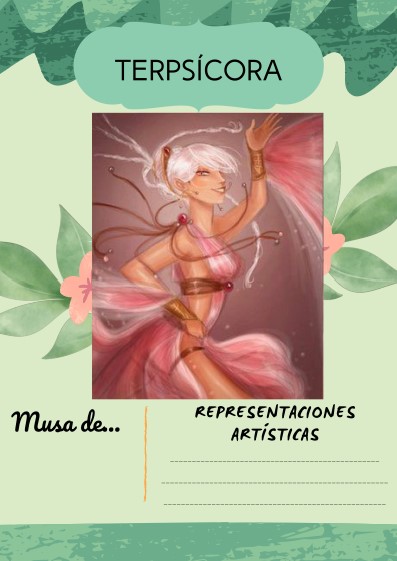
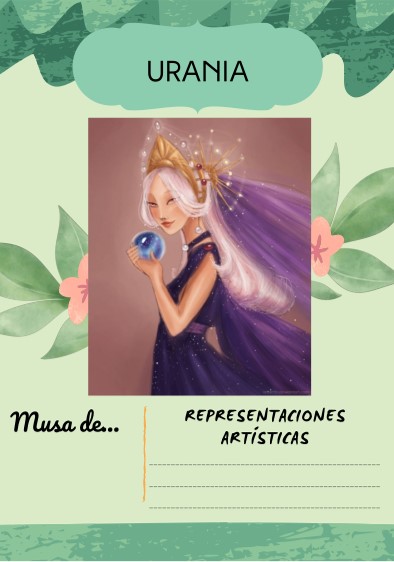
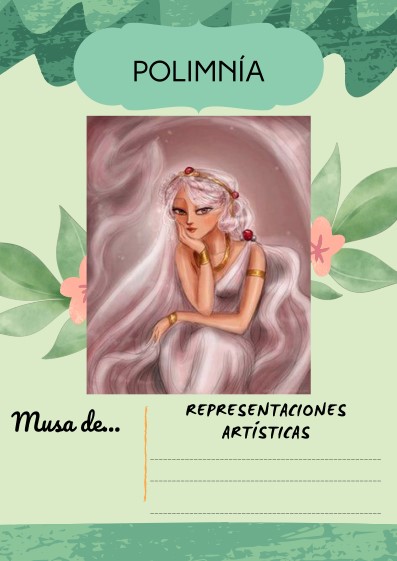
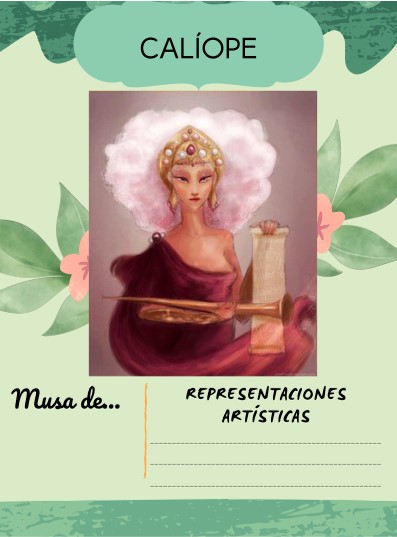
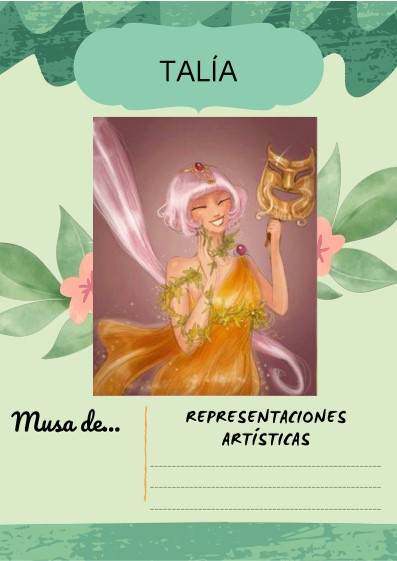
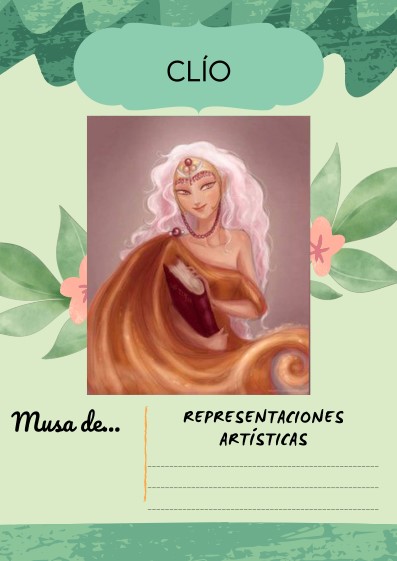
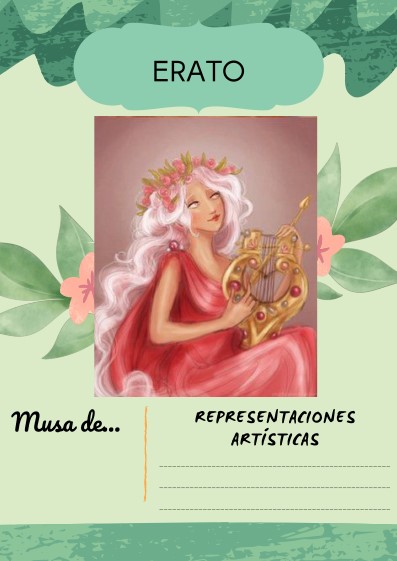
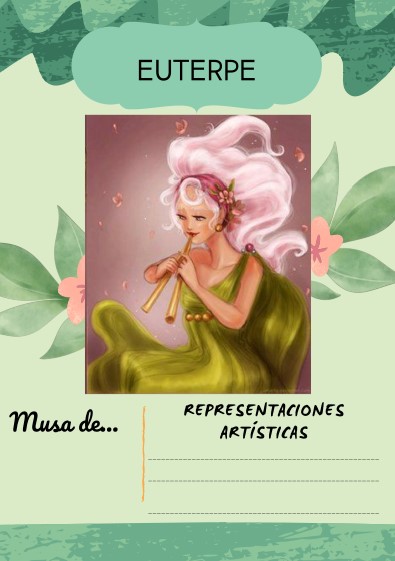
Unfortunately, most of his work has not survived to the present day and we do not have any complete poems. One of the fragments found mentions the Muse Terpsichore. Thanks to this mention, you will learn about the sphere of action of the Muses and their artistic representations in iconography.
1. Read the following extract and underline the name of the Muse that appears:
Fragment 1 (PMG 655)
Terpsichore calls upon me
to sing good tales
for the white-robed women of Tanagra,
and the city delights greatly
in my clear, beguiling voice.
for whatever ... great ...
false ...
... land of wide dancing-places
adorning the tales of my ancestors
with my own [?] ...
for maidens ...
... I ... often celebrating Father Cephisus
with my words,
often mighty Orion
and his fifty powerful sons,
whom, in union with the nymphs
and lovely Libya he conceived,
...
the maiden ... I shall tell ...
fair to see
earth whom ... conceived
... begat ...
KlincK, Anne L. (2008), "Corinna", in Woman's Songs in Ancient Greece, Montreal, Quebec: McGill-Queen's University Press, (retrieved on 28/05/2023) <https://www.jstor.org/stable/j.ctt8137f.11>
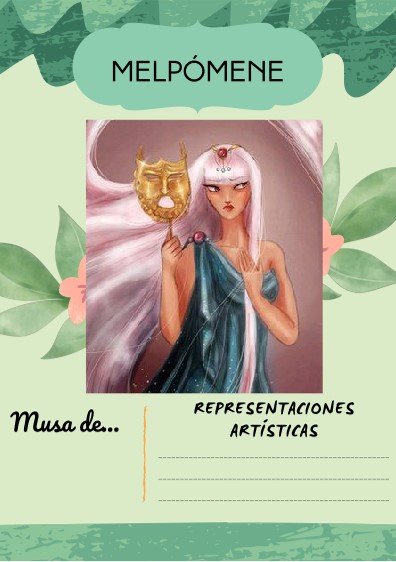
2. Fill in the card for each Muse, saying what she is a Muse of (her sphere of action) and how she is usually represented in art.