
Read carefully the following verses by Sappho, a poetess who lived between the 7th and the 6th centuries BC In the island of Lesbos; try to read them using a phonetic transcription chart.
Οἰ μὲν ἰππήων στρότον, οἰ δὲ πέσδων,
οἰ δὲ νάων φαῖσ’ ἐπὶ γᾶν μέλαιναν
ἔμμεναι κάλλιστον, ἔγω δὲ κήν’ ὄτ-
τω τις ἔραται.
Some say thronging cavalry, some say foot soldiers,
others call a fleet the most beautiful of
sights the dark earth offers, but I say it’s whatever
you love best..
Sappho, Frg. 16 LP
The Poetry of Sappho. Translation and Notes by Jim Powell (2007). Oxford University Press (retrevied on 07/06/2023) <http://www.projethomere.com/ressources/Sappho/Poetry-of-Sappho.pdf>
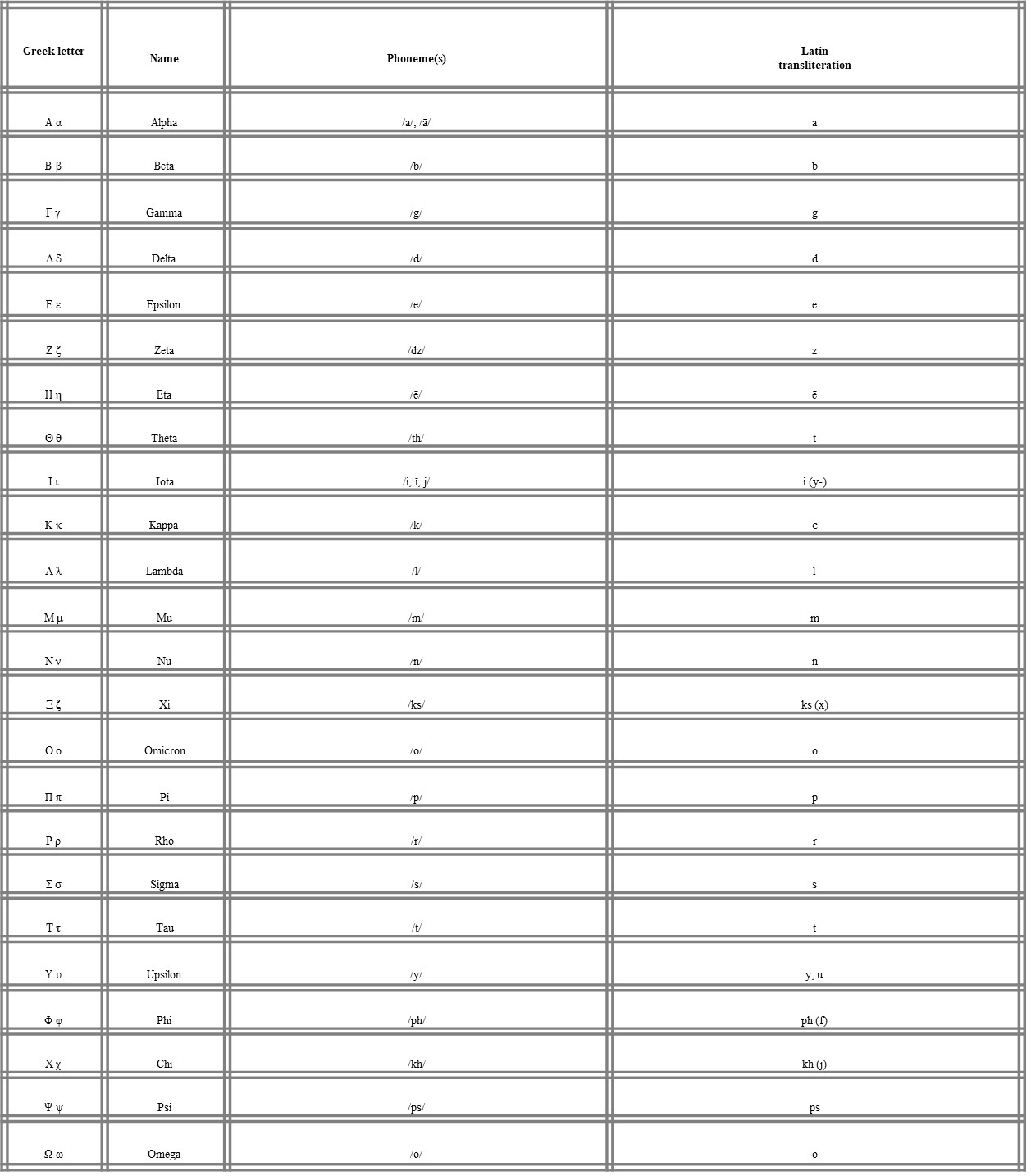
You probably think that this language is far from yours, but in this activity you will find out why that is wrong. There are, at least, 11 words in these verses from which we can extract other words in our language. They are highlighted in yellow.
Οἰ μὲν ἰππήων στρότον, οἰ δὲ πέσδων,
οἰ δὲ νάων φαῖσ’ ἐπὶ γᾶν μέλαιναν
ἔμμεναι κάλλιστον, ἔγω δὲ κήν’ ὄτ-
τω τις ἔραται.
1. Copy the words in the first column in the same order they appear.
2. Deduct which of the suggested Greek etymons is related to it and complete the other two columns.
3. Using the table you have used to read the verses, transcribe the Greek etymons into the Latin alphabet and complete the fourth column.
4. Find derivatives of those etymons. You can use an online dictionary.

ETYMONS: μέλας (black) / φη- ,φα- (say, speak) / ἵππος (horse) / ἐγώ (I) / στρατός (army) / ἐπί (above) / ποῦς, ποδός (foot) / ἐρος (love) / ναῦς (ship) / γῆ (earth) καλός (beautiful)