
This drawing is one of Eleanor Omerod's drawings of the Hypoderma bovis fly, which causes bovine hypodermosis or "zits". The drawing was distributed in pamphlets for cattlemen, with advice on how to identify the flies that cause "barros" and how to combat them.
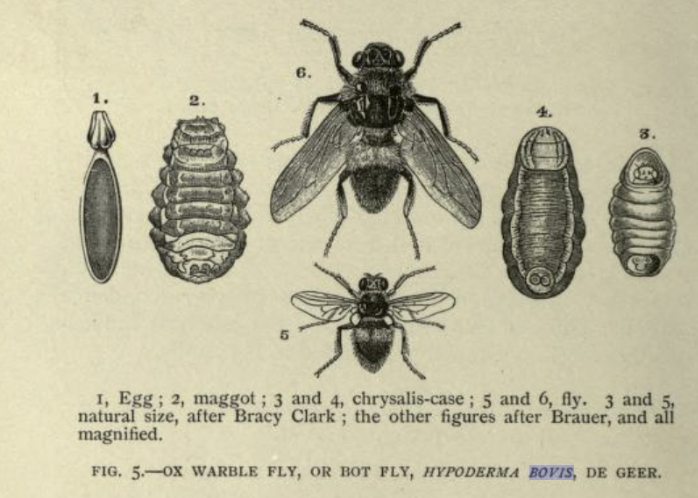
This fly has a life cycle in which during the summer it lays its eggs in the body of cows. During the fall and winter, the larvae move under the skin of the animal, either by being swallowed by the cows or by piercing the skin to get under it. There, the larvae mature (generating lumps called muds, which are usually observed in February to March) and leave the animal's body through the piercing hole.
The effects of bovine hypodermosis are very negative for the cow, as they result in lower milk production, a higher incidence of mastitis, weight loss and depreciation of the hides.
Within the ecosystem, the relationship between the Hypoderma bovis fly and cows is an interspecific relationship:
1. Why?
2. What type of relationship is involved? Justify your answer.
3. What other types of interspecific relationships do you know of? Describe them and give an example of each one.
4. Find an example of an arthropod that is parasitic on humans.