
Read the original text and the translation of Letter 1 written by Cornelia, an influential matron from the 2nd century BC, and answer some questions about the present stem.
After the murder of her son, Tiberius Gracchus, Cornelia retired from Rome to Misenum. From there, she wrote letters to her son Gaius Gracchus.
1.- Dices pulchrum esse inimicos ulcisci. id neque maius neque pulchrius cuiquam atque mihi esse videtur, sed si liceat re publica salva ea persequi. sed quatenus id fieri non potest, multo tempore multisque partibus inimici nostri non peribunt atque, uti nunc sunt, erunt potius quam res publica profligetur atque pereat.
1,- “You will say that it is a beautiful thing to take on vengeance on enemies. To no one does this seem either greater or more beautiful than it does to me, but only if it is possible to pursue these aims without harming our country. But seeing as that cannot be done, our enemies will not perish for a long time and for many reasons, and they will be as they are now rather than have our country be destroyed and perish.”
Vivante, Bella (ed.) Women's Roles in Ancient Civilizations. Westport: Greenwood Press, 1999.
1.- Analyse the following tenses with personal endings from the text.
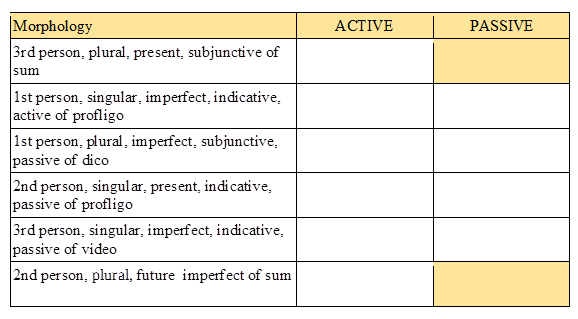
Dico-is-ere; licet (2nd conj., only in the 3rd person singular); profligo-as-are; sum,es,esse; video-es-ere
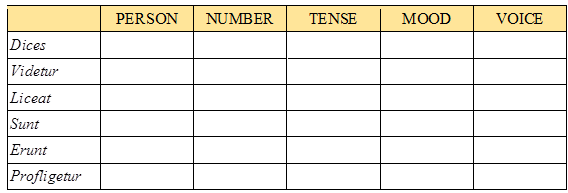
2.- Write down the corresponding tense.
3.- Conjugate video and dico in the future imperfect active. .