
In electricity, an arc is an electrical discharge that occurs between two electrodes that are subjected to a potential difference and are placed in a gaseous atmosphere. This produces light and heat. It was studied at the beginning of the 20th century by Hertha Marks Ayrton, an engineer, mathematician, physicist and inventor. It was used as a source of high-intensity artificial light, much brighter than incandescent bulbs, and was used in the film industry to achieve high luminous intensities in film shooting, as well as in film projectors. It is still in use today for its calorific effects in metal welding and the melting of refractory materials.
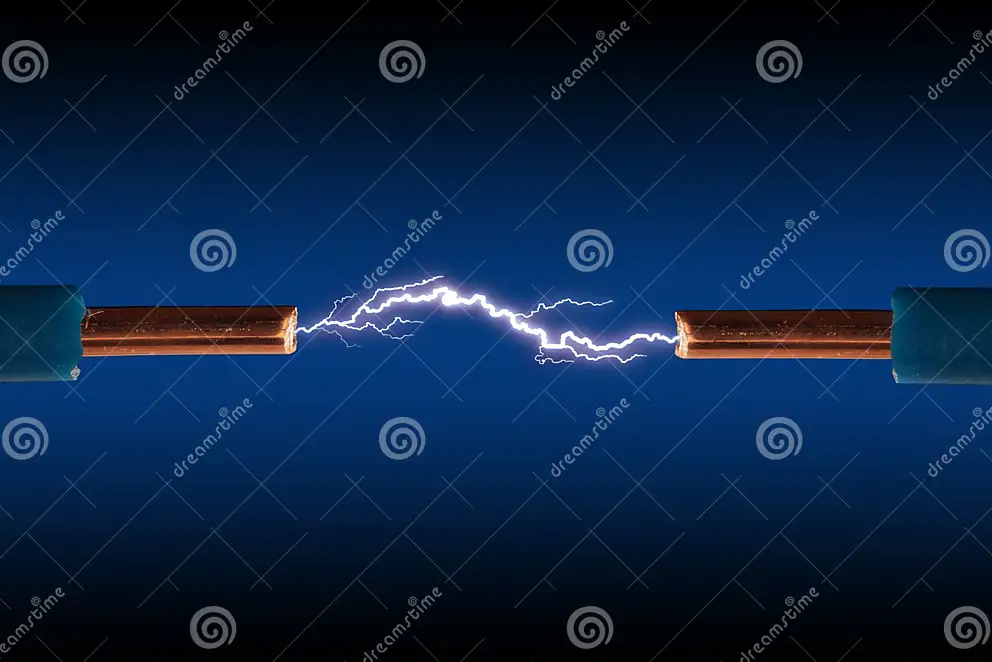

In order to initiate an arc, the end of two electrodes, usually two graphite pencils, have to meet. An intense current (10 amperes) goes through them. This current causes a great heating in the contact point when the electrodes separate.
- How long will it take for 0,5 C to pass?
- Calculate the number of electrons that will have circulated through the electrodes half an hour later (e=1,6.10-19 C)