
Eunice Foote, born in 1819 in the USA, did home experiments using the little knowledge of biology and chemistry that she acquired at school, and obtained excellent results.
1- In one of these experiments, she used two glass tubes with a thermometer inside. One of them had regular air inside, and the other one had humid air. Once the temperature of both tubes reached 75ºF, she left them outside to warm up in the sun and wrote down the temperature indicated in the thermometers. She collected the information in the following tables. Use them to draw both graphs in the same axis and answer the questions.
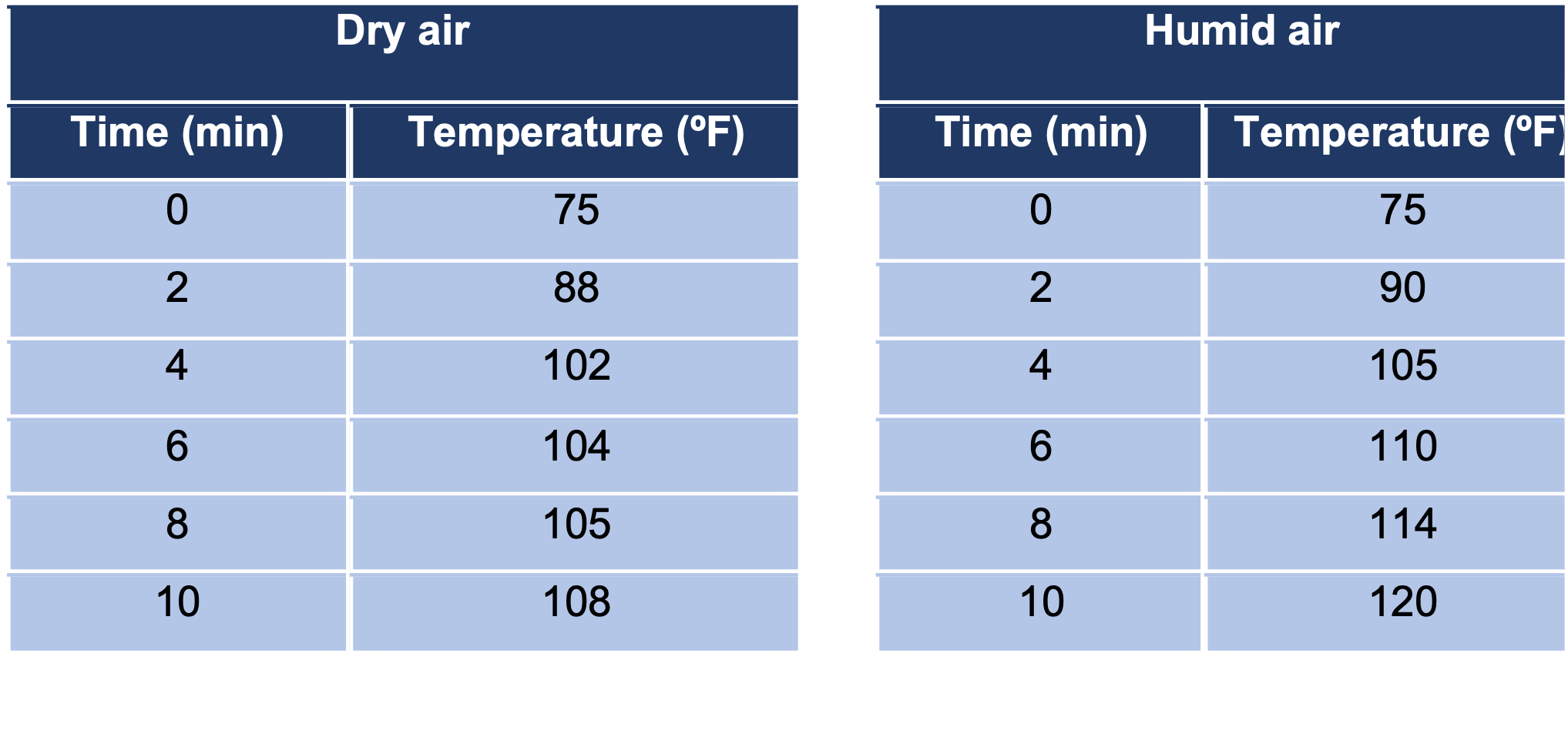
a. For how long did Eunice Foote measure temperature?
b. Which tube reached a higher temperature?
c. What is the difference in temperature between the tubes in her last measurement?
d. Can you think of any situation in which this effect happens?
2- Later on, she repeated the experiment using a tube filled with normal air and another one with a higher concentration of CO2. She obtained the tables below. Draw the corresponding graphs and answer the questions about both experiments.
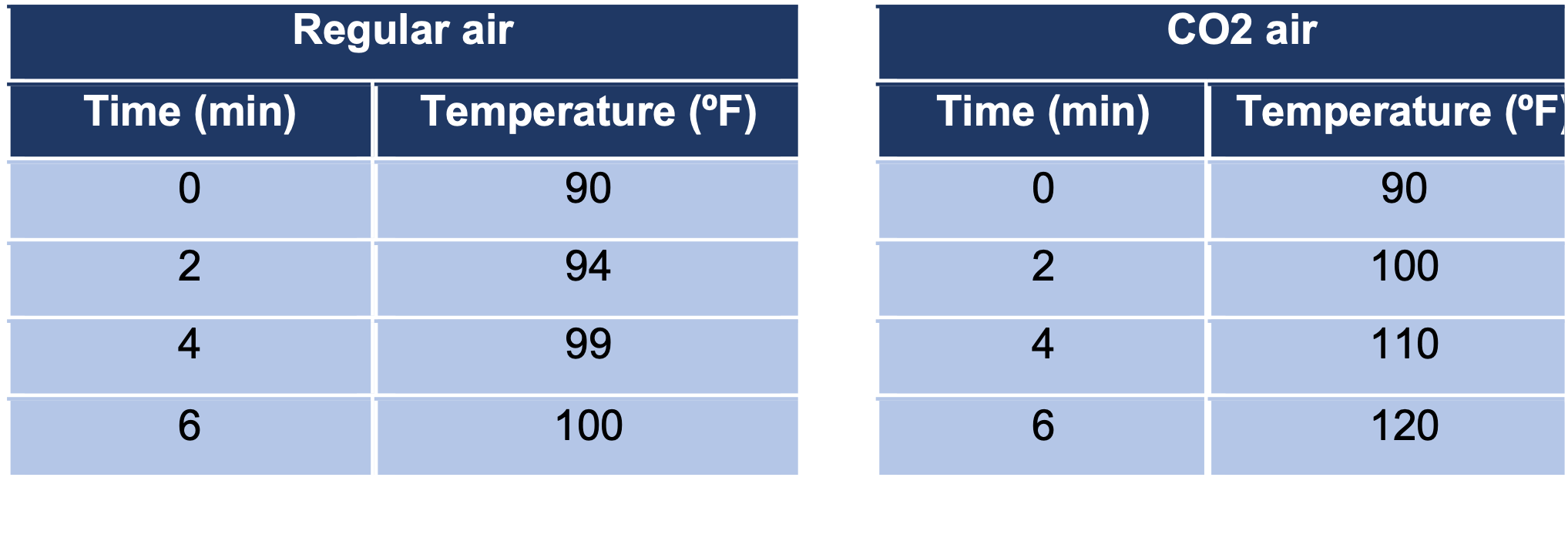
a. For how long did Eunice Foote measure temperature?
b. Which tube reached a higher temperature?
c. What is the difference in temperature between the tubes in her last measurement?
3- In 1856, Eunice went alongside her husband (a mathematician and inventor) to the American Association for the Advancement of Science (AAAS) to publish her results, but she was not allowed to read them because she was a woman. Luckily, a colleague of hers, Joseph Henry, read her article and used his speech to inform against the attitude of the association: "Science has no country or gender. Women's sphere is not only about beauty and usefulness, but also about truth".
Using the graphs and your answers to the questions above, explain what effect CO2 has on air when it is exposed to sunlight. Pretend you are Eunice Foote and you are given permission to talk at the AAAS. Briefly present your measuring method, show the graphs you have drawn and add your own conclusions by explaining what happens in a simple way.