
We owe the theory of endosymbiosis to Lynn Margulis. This theory explains the emergence of eukaryotic cells from primitive prokaryotic organisms. The following diagram summarizes the theory:
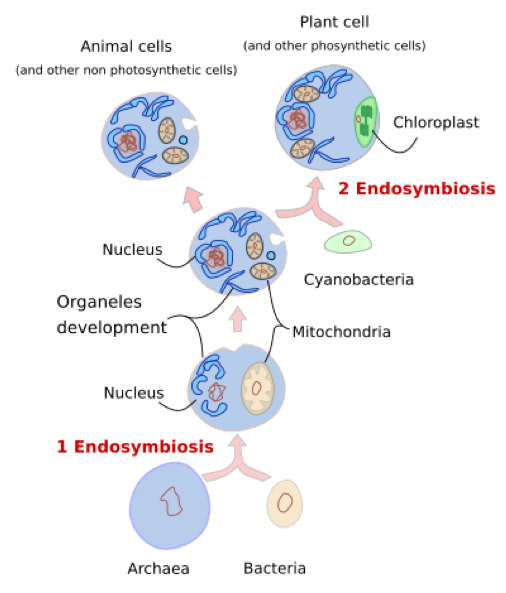
Figure 1: Events that supposedly led to the appearance of mitochondria and chloroplasts. Occurred through two independent processes of endosymbiosis, or primary endosymbiosis.Taken from: https://mmegias.webs.uvigo.es/02-english/5-celulas/1-endosimbiosis.php
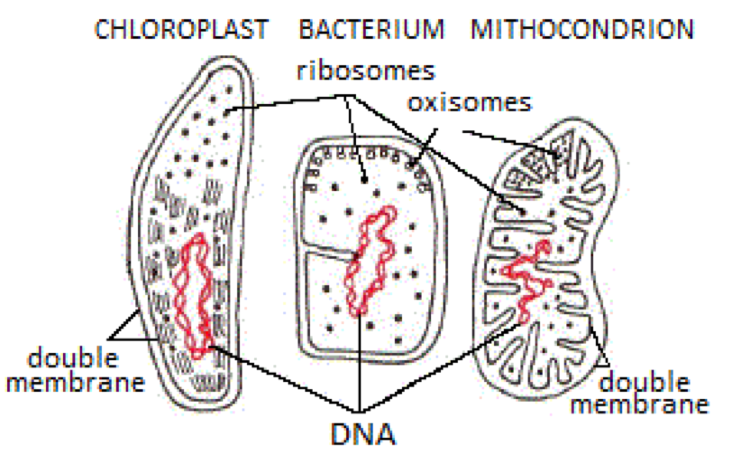
Figure 2: Comparative structure of prokaryotes, chloroplasts and mitochondria.Taken from:http://www.biologia.edu.ar/botanica/tema8/8-3organulo.htm#Fig%2016
Look at the two figures above and answer the following questions:
1. What similarities do you see in the structure of chloroplasts, mitochondria, and bacteria?
2. Look at figure 1 and determine:
a. How many endosymbioses gave rise to animal cells?
b. How many were necessary to originate plant cells?
3. Based on the above: Where do mitochondria come from? And chloroplasts?
4. Will plant cells have mitochondria?
5. Briefly explain Lynn Margulis's theory of endosymbiosis, indicating what clues could have led her to propose such a theory. Why do you think it is called endosymbiosis and not just symbiosis?