
Answer the questions about three famous monuments in Emerita Augusta, some preserved buildings, and the figure of an important citizen of Emerita, the physician Julia Saturnina, who lived in the 1st century AD.
1.- Write under each monument, dedicated to performances, which kind of building it is and what it was used for.
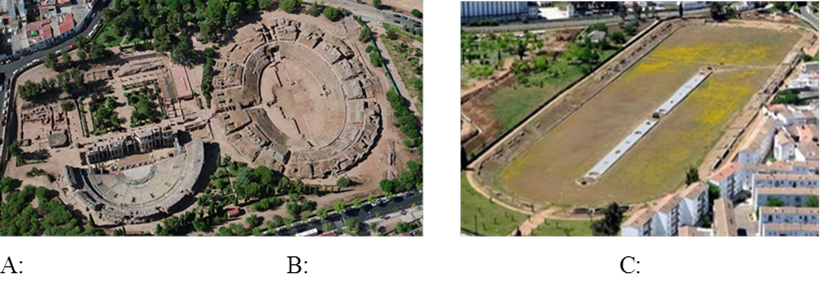
2.- Which two monuments are a Roman invention? What are the differences between a Greek and a Roman theater regarding the orchestra, where they were built and the stage?
3.- Find out which of the three monuments is still used today and what cultural activity it holds every year. People are requesting that this monument is inscribed as Intangible Cultural Heritage of Humanity. What argument would you give UNESCO so that they would accept?
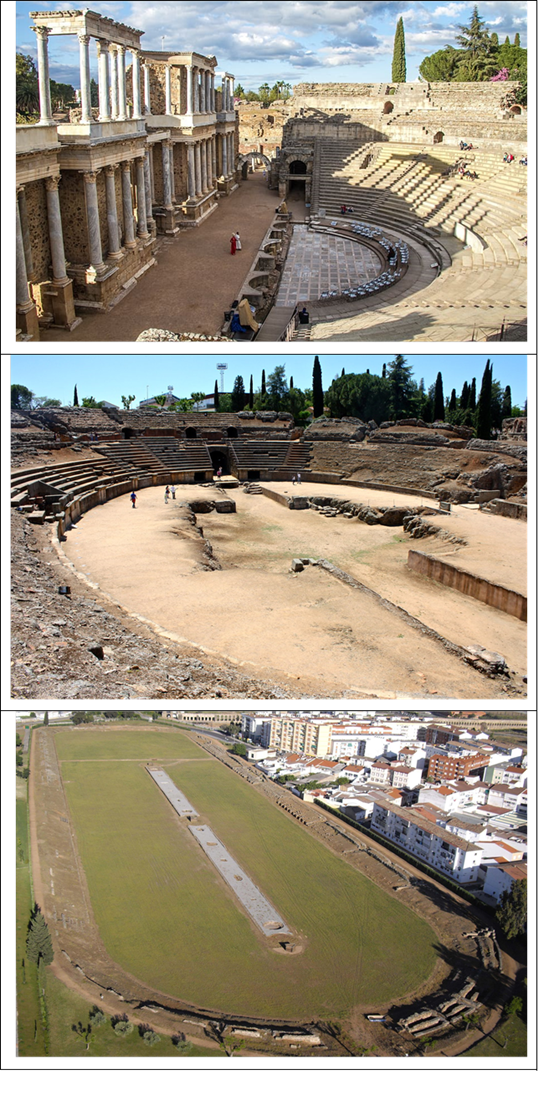
4.- Place the following names in the pictures.
Picture 1: frons scaenae, ima cavea, media cavea, orchestra, scaena, summa cavea
Picture 2: arena, cavea, fossa bestiaria, palco
Picture 3: meta, spina, gradas, arena, carceres
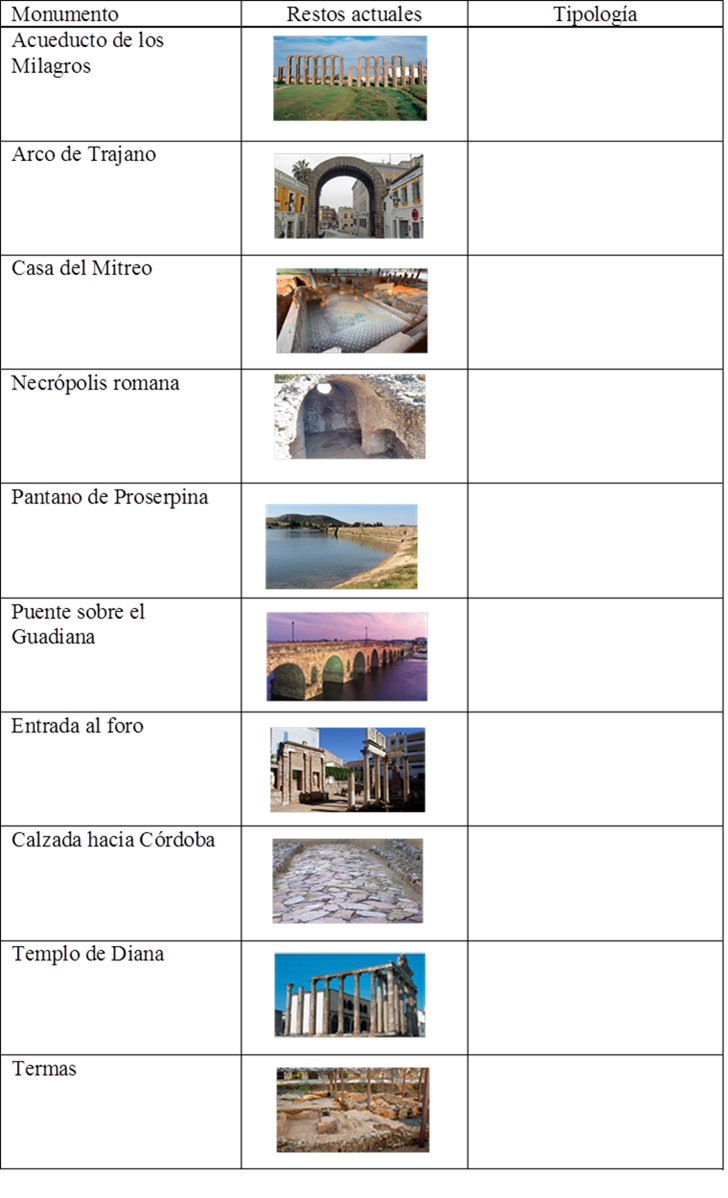
5.- Write the type of building the architectural remains in the city of Merida were: religious buildings, meeting places, commemorative monuments, engineering works, domestic architecture, funerary architecture.
6.- Archeological findings in the ancient Roman city of Emerita Augusta are preserved in the National Museum of Roman Art in Spain. Amongst these findings there are over 500 inscriptions; some of them were public, written in buildings, and others were private, mostly linked to funerary practices. We are going to learn about Julia Saturnina's inscription. She was a physician from Emerita who lived in the 1st century AD.
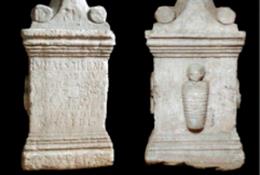
a.- On the back of her funerary stele, there is a relief of a newborn wrapped in tight bandages.
· What do you think this physician specialized in?
· Why do you think they wrapped babies in such a way?
b.- The inscription (picture provided) reads the following: "To Julia Saturnina, 45 years of age, incomparable wife, excellent physician, and most honourable woman. Cassius Philippus, her husband, (did this) to commemorate her merits. Here she lies. May the earth rest lightly on you."
· How does Cassius Philippus describe his wife?
· What aspects of her life does he emphasise?
· Because of some authors and inscriptions, we know that there were many female doctors in Rome, why do we have so little information about them, or even about the treatises they wrote?
· What expression is used to wish her eternal rest? In Latin, they use the initials S. T. T. L. (Sit tibi terra levis), what initials are used nowadays in English?