
You are going to meet the nine poetesses that belong to what it is considered to be the "first feminine literary canon". Antipater of Thessalonica gathered them in an epigram that he supposedly wrote and called them "the nine Muses". The activity that you are going to complete has several parts.
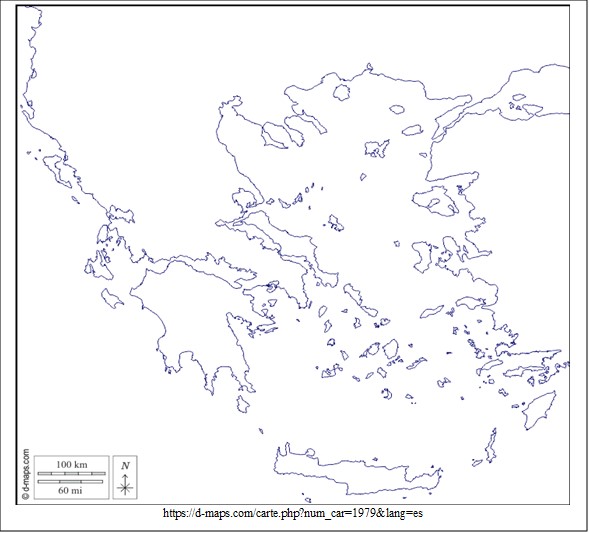
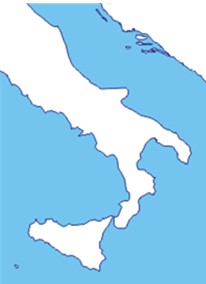
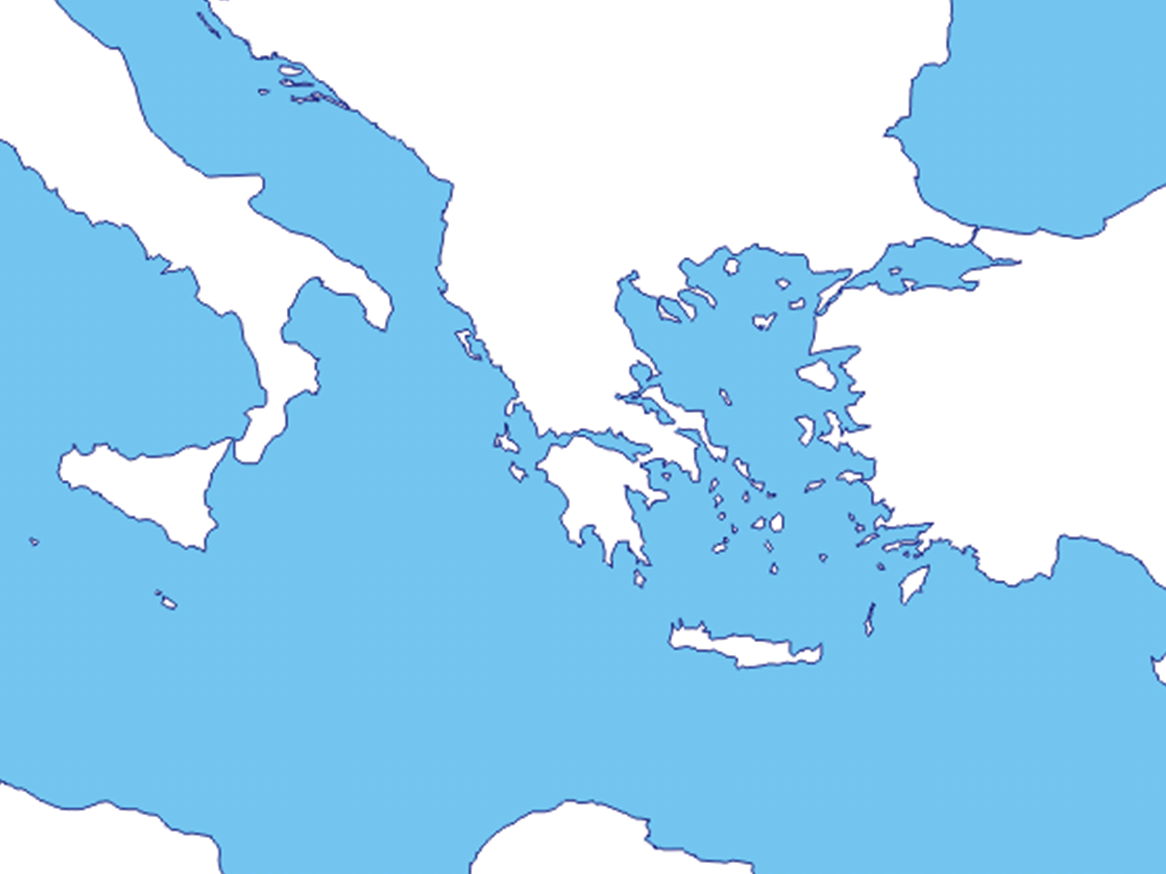
1- Read the following text and extract all the places that are mentioned regarding the origins of the lyric genre. Once extracted, place them on the map you are given (use different colours to mark the regions and islands and a black ink pen to write down the name of the regions or cities).
2-Read Antipater of Thessalonica's epigram and extract the names of the nine poetesses. Write them down. Place Mount Helicon and the hill of Pieria.
3- Following the information table, situate the place of origin of the poetesses in the map.
4- Check the table again and create a timeline to order them chronologically.
TEXT
A journey through lyric poetry
It's important to highlight that Greek lyric appears, precisely, in contact with the East. That's the origin, in the 7th century, of its musical instruments. Of the mytical founders of the lyric, Olympus was from Phrygia; Orpheus and Thamyris, from Thracia; Olen, from Lycia; let's add Chrysothemis from Crete. From Ancient times, the Lesbian citharodes. Not far from there we find the island of Chios, land of the ancient author of Hymn to Apollo; and in Asia there's Sardis, capital city of Lydia and home to Alcman, a Greek man who undoubtedly learnt from the Asians. Ephesus and Colophon, in Asia, are home to poets as well; and so are close islands like Paros and Crete. This tradition then moved to Argos, Corinth, Locris and, then, to Italy.
Choral lyric and monodic lyric
They are found everywhere, but specially in the island of Lesbos, home to the most distinguished citharodes; but that's not the only place. Let's write a list, even if incomplete, of the Locrian cities in Greece or their colony of the same name in Italy: Argos, Corinth, Colophon, Mithymna, Himera, Sardis, Paros, Ephesus, Sparta, Gortyna, Khytira, the island of Lesbos, Telos, Cos or the Asia Minor strip [...]
Our own translation from Rodríguez Adrados, Francisco (1980). Lírica griega arcaica (Poemas corales y monódicos, 700-300 a. C.), Madrid: Gredos.
EPIGRAM / FIRST "CANON" OF FEMININE POETRY
This epigram is not a catalogue of all Greek female writers, because these poetesses were not the only women to write in Ancient Greece. For this reason, the canon assesses and selects from the catalogue. Just like the heavenly muses were raised at the foot of Mount Helicon, the divine inspiration of these poetesses is the cornerstone that the author uses to claim that they were also fed at Pieria, that is, that they were also muses.
Τάάσδε θεογλώώσσους Ἑλικὼν ἔθρεψε γυναῖκας
ὕμμνοις, καὶ Μακεδὼν Πιερίίας σκόόπελος,
Πρήήξιλλαν, Μοιρώώ, Ἀνύύτης στόόμμα, θῆλυν Ὅμμηρον,
Λεσβιάάδων Σαπφὼ κόόσμμον ἐυπλοκάάμμων,
Ἤρινναν, Τελέέσιλλαν ἀγακλέέα, καὶ σέέ, Κόόριννα,
θοῦριν Ἀθηναίίης ἀσπίίδα μμελψαμμέέναν,
Νοσσίίδα θηλύύγλωσσον, ἰδὲ γλυκυαχέέα Μύύρτιν,
πάάσας ἀενάάων ἐργάάτιδας σελίίδων.
ἐννέέα μμὲν Μούύσας μμέέγας Οὐρανόός, ἐννέέα δ'ʹ αὐτὰς
Γαῖα τέέκεν, θνατοῖς ἄφθιτον εὐφροσύύναν.
These are the divine-voiced women that were fed with songs,
by Helicon and the Macedonian hill of Pieria:
Praxilla, Moero, the mouth of Anyte, the female Homer,
Sappho, glory of the beautiful, curly-haired Lesbian women,
Erinna, renowned Telesilla, and you Corinna,
who sang the military shield of Athena,
female-tonged Nossis, and sweet-sounding Myrtis,
all craftswomen of eternal pages.
Great Ouranos gave birth to nine Muses, and these nine
Gaia bore, deathless delight for mortals.
(AP IX 26)
Fernández Robbio, Matías Sebastián (2014). «Musas y escritoras: el primer canon de la literatura femenina de la Grecia antigua (AP IX 26)», en Praesentia 15, (retrevied on 05/04/2022)
The poem establishes a correspondance between the Muses and these poets. The Muses, daughters of Uranus, were nine immortal women, protectors of the nine arts: Calliope of Epic poetry, Clio of History, Erato of Love poetry, Euterpe of Music, Melpomene of Tragedy, Polyhymnia of Hymns, Thalia of Comedy, Terpsicore of Dancing and Choral lyric, and Urania of Astronomy and Christian poetry.
INFORMATION TABLE
The authors cited lived between the 7th and 3rd centuries BC. None of them was from Athens, they were from distant regions such as Byzantium in ancient Ionia or Locri in Magna Graecia

TIMELINE

Answer the following question:
Which periods of Ancient Greece do these nine poetesses belong to?