
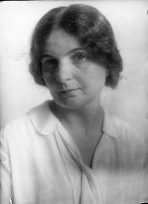
Hilda Geiringer's Portrait
Hilda Geiringer was a great German mathematician from the 20th century who was a pioneer in applying the theory of relativity and statistics to different fields, such as genetics.
In order to study the eye colour of an individual, we must know that it depends on two alleles, one from the father and one from the mother, which include the genetic information of the colour to inherit. Besides, if an individual has just one hazel allele, they will have hazel eyes, but in order to have blue eyes, we need two blue alleles. This means that the hazel allele is the dominant one, because it determines the eye colour even if it just appears once.
Let's imagine that a woman with a hazel and a blue allele (and, therefore, with hazel eyes) has a baby with a blue-eyed man (that is, someone with two blue alleles). In the following table you will find all the possibilities considering what each one of them might pass on to their offspring.
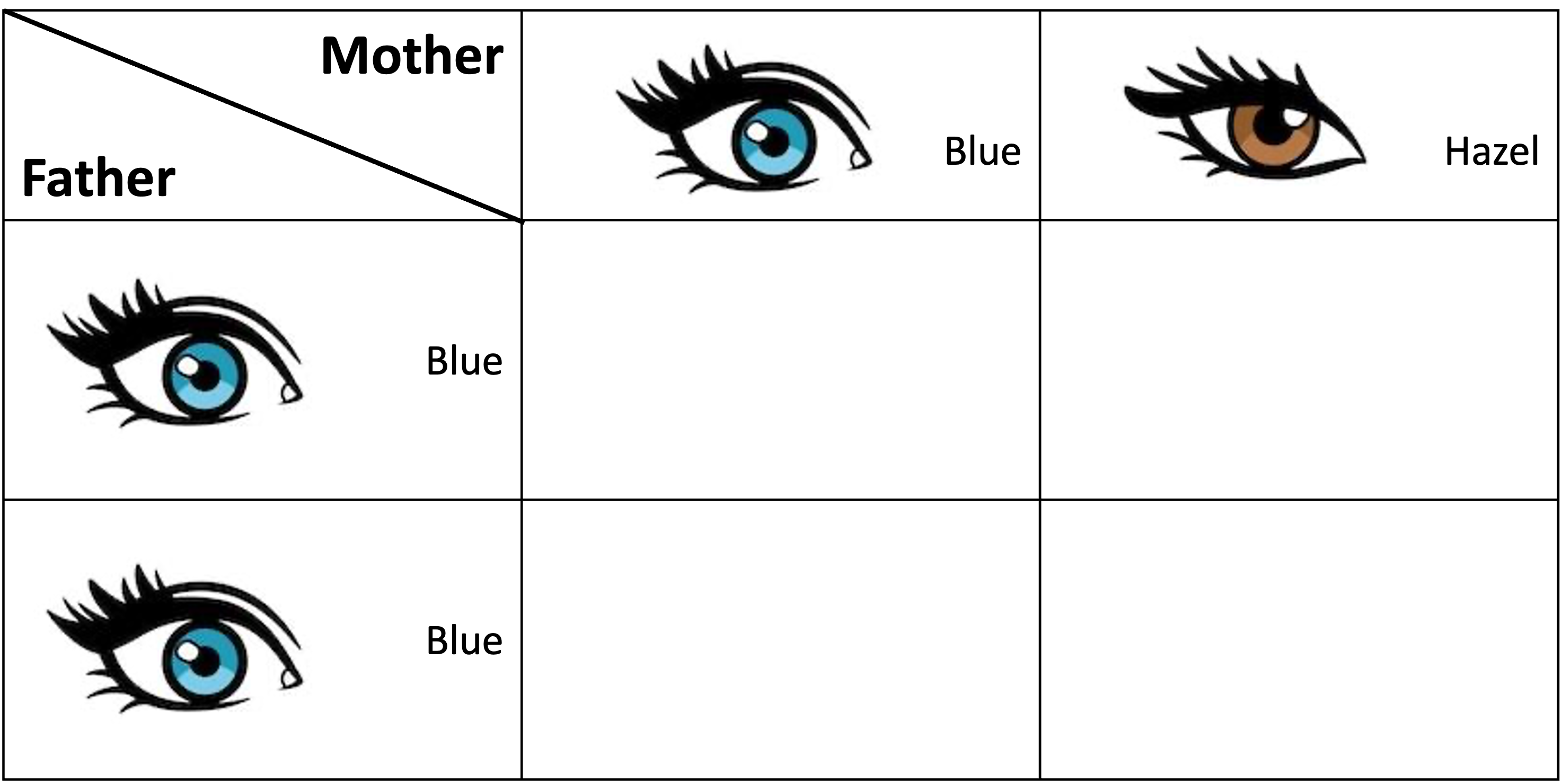
1. How many possible combinations are there in total? How many of them are different?
2. What eye colour will the baby have in each case?
3. Using Laplace's rule of succession, calculate the probability of the baby having blue eyes. What is the probability of the baby having brown eyes?
4. Two people with brown eyes have a blue-eyed baby. How is it possible? Draw a table like the one above keeping in mind the alleles of the parents and use it to calculate the probability of the baby having blue eyes.