
Viria Acte, born in Valentia Edetanorum, present-day Valencia, ca. the year 90 A.D., was an extraordinary woman who, having been a slave, became a successful businesswoman. She was the owner of a statue workshop that she run herself and that became very prestigious. She received many compliments and honours due to her work and her contributions to the city of Valencia.
She is not the only woman that we are aware of in this context. Epigraphy has allowed us to learn about many other women from the same period and others, what they did and where they were born or lived. They are spread throughout the Hispanic territory.
1- Based on the information provided in the attached tables, write the names of these women on the map in the corresponding places.
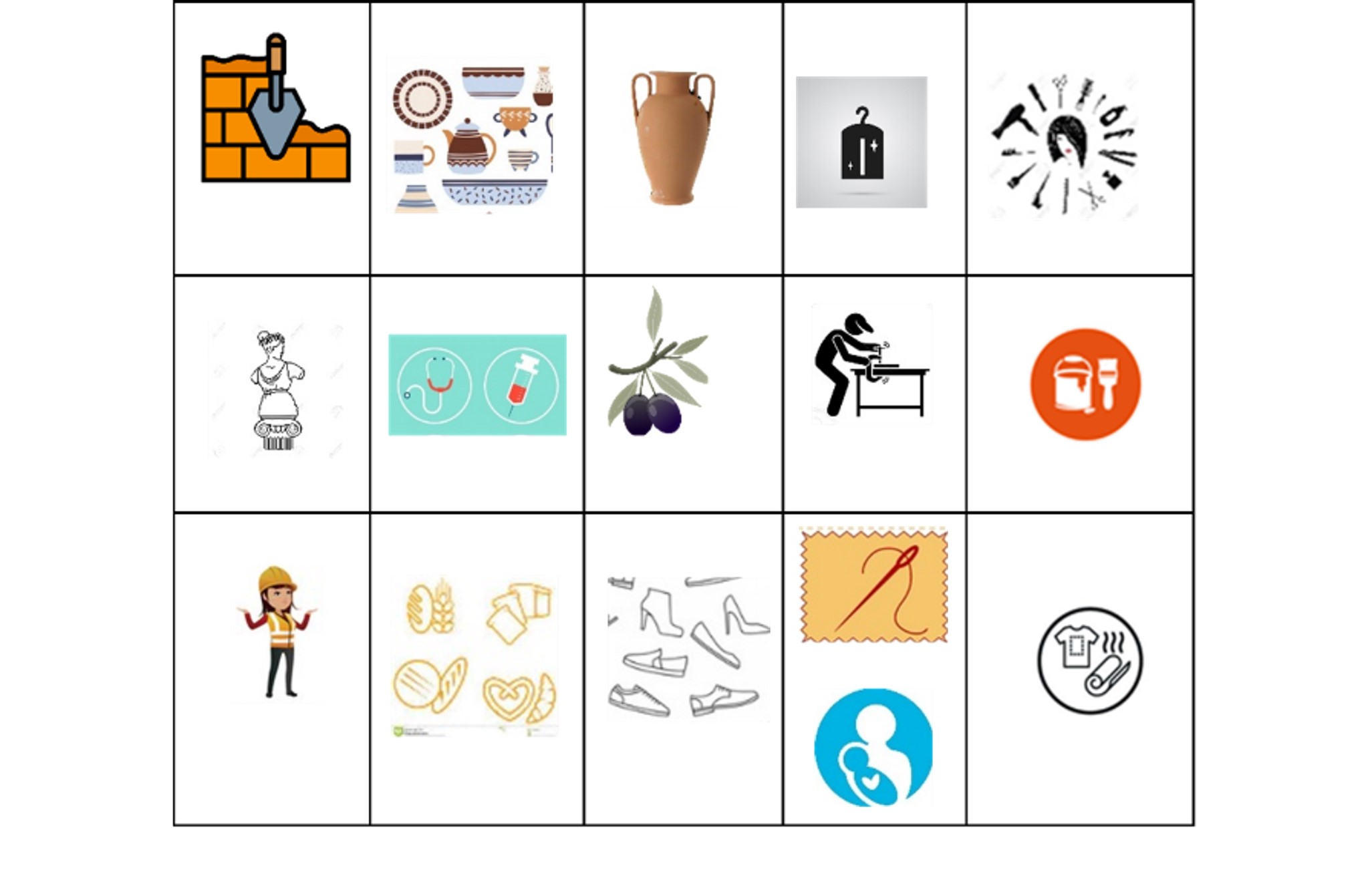
2- Cut out and paste the icon corresponding to the economic occupation that each of these women carried out. Paste it in the appropriate place.
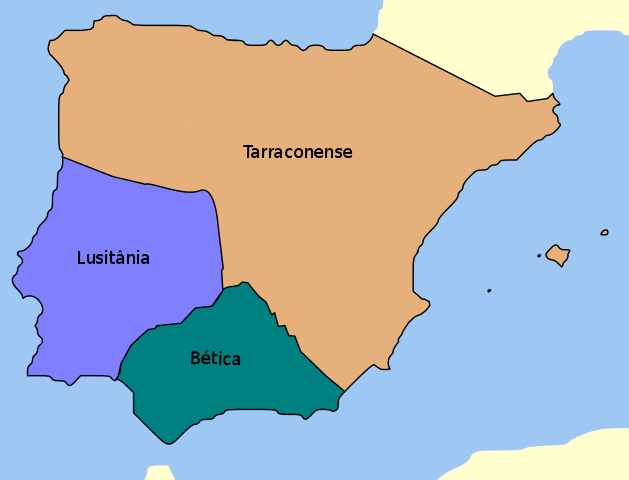
The division of Augustus. 27 B.C.
In 27 B.C., Augustus divided Hispania into three provinces, subdivided into conventus iuridicus: Tarraconensis, with its capital at Tarraco; Baetica, with its capital at Corduba (Cordoba); Lusitania, with its capital at Emerita Augusta (Merida).
1- Refer to the tables provided and write on the map the name of each of the women in the corresponding place.

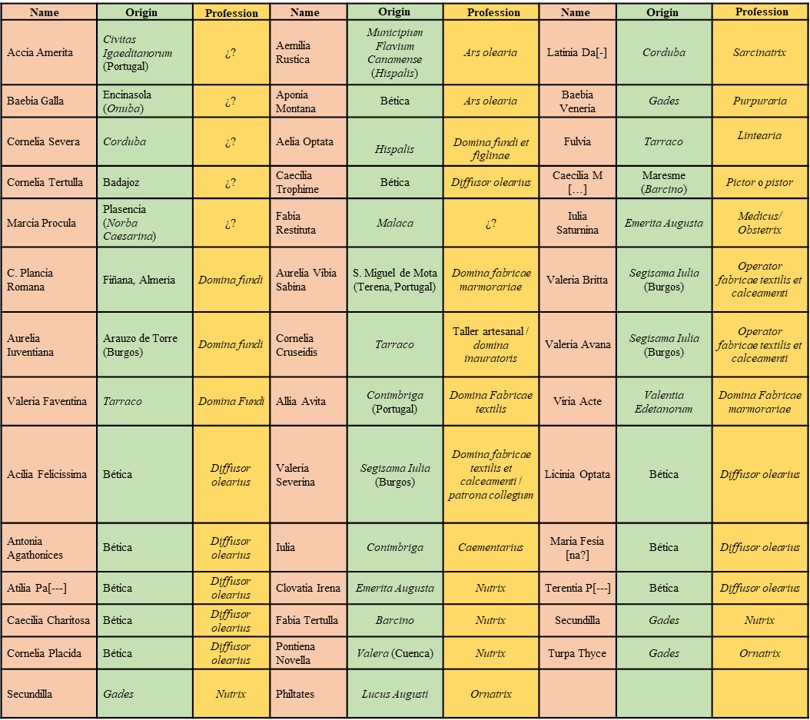
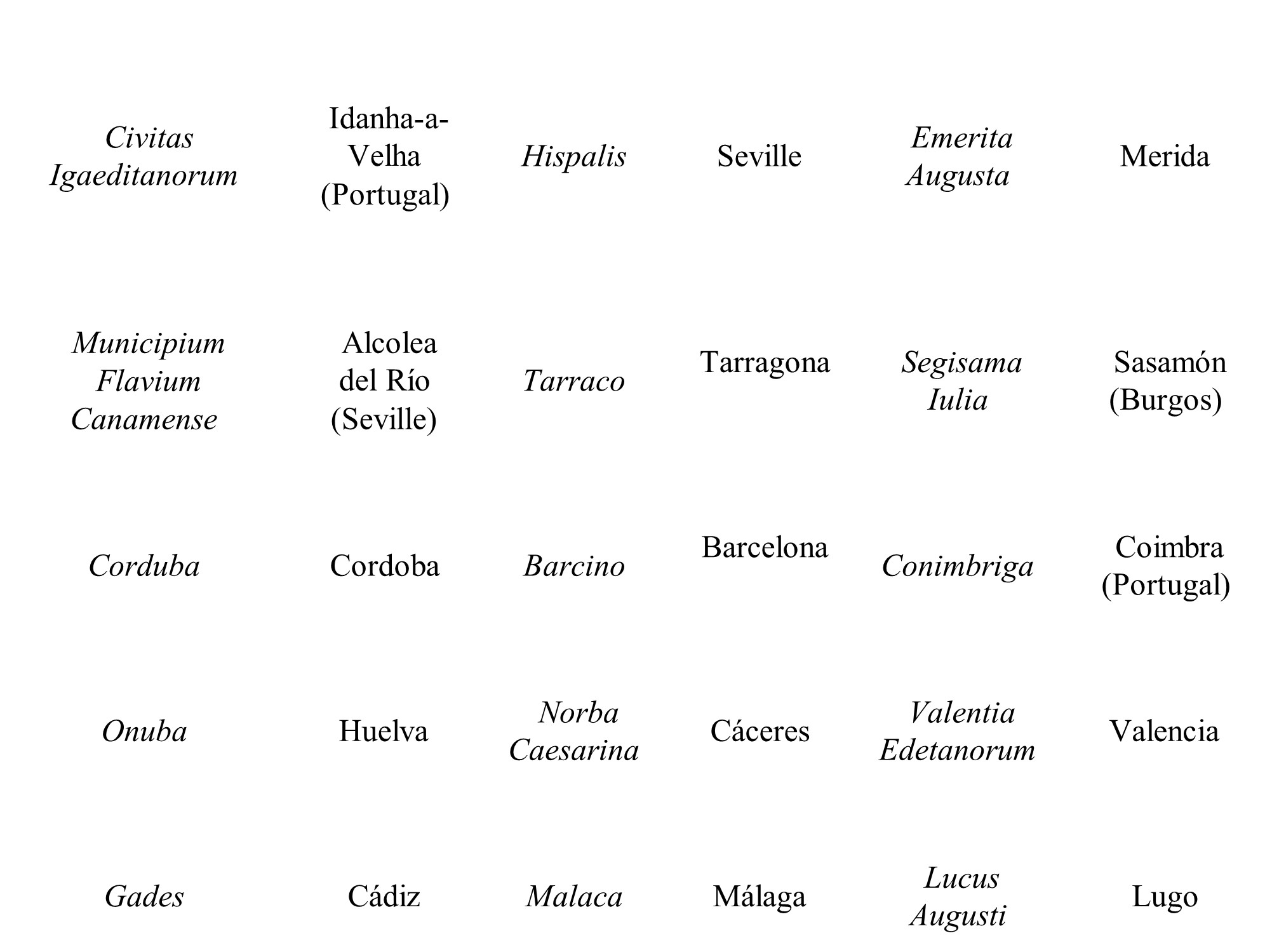
LATIN TOPONYMS
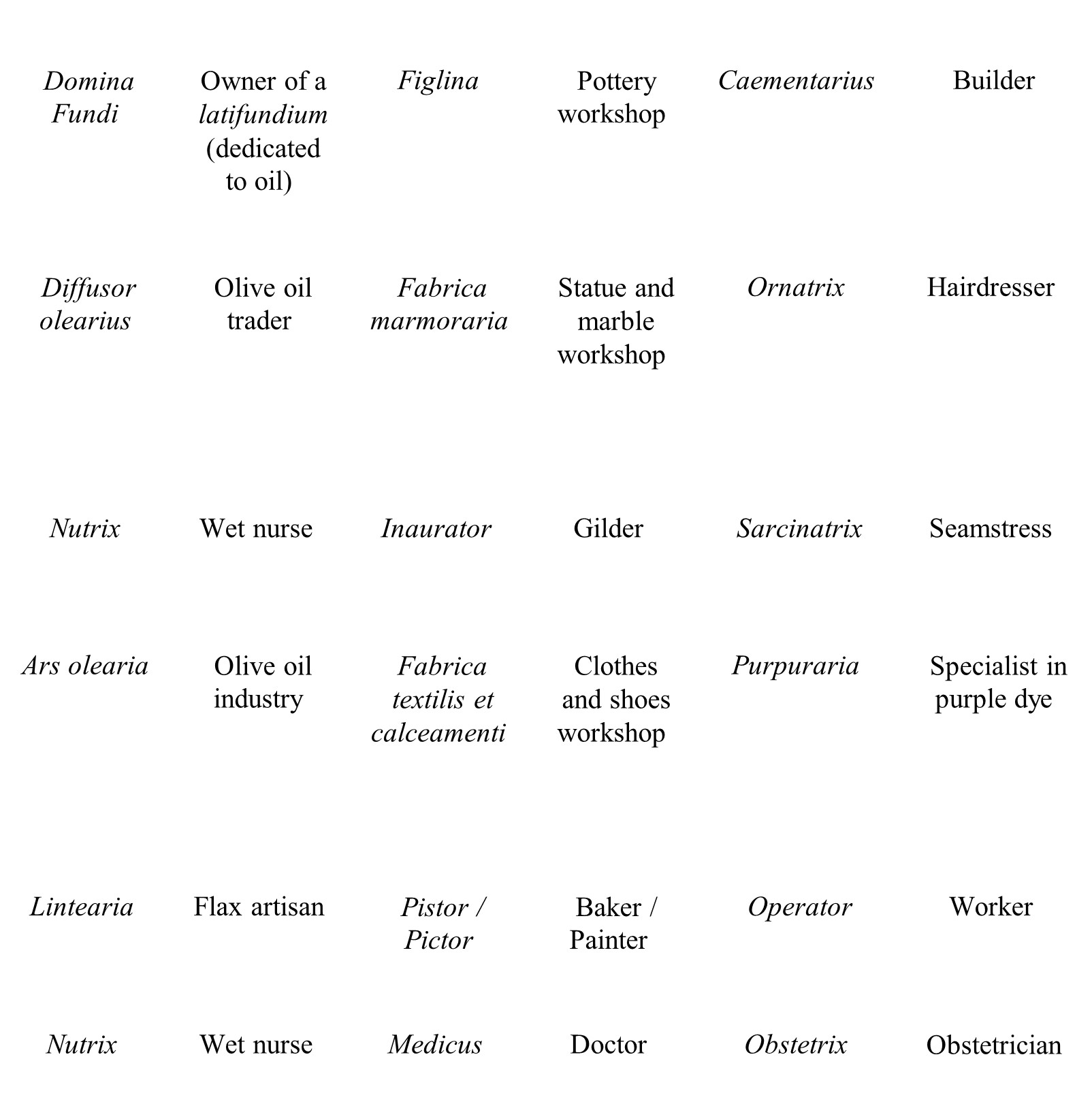
2- See the table below to find out to which professions each of the Latin names correspond. Select, cut out and paste (or draw yourself) the icon corresponding to the economic occupation of each of these women. Paste it in the corresponding place.
PROFESSIONS
ICONS
Answer the questions:
1- What is the most common activity or activities?
2- Where do they mostly occur?