Fragment 1 of Cornelia: gender and number (2)
Personajes:
Tema: Gender and number
Competencias
Competencia en Comunicación Lingüística
Competencia Plurilingüe
Competencia Personal, social y de aprender a aprender
Competencia en conciencia y expresiones culturales
Materias y cursos por Sistema Educativo
España > Latín > 4º ESO > El texto latino y la traducción
Enunciado

Read the original text and the translation of Letter 1 written by Cornelia, an influential matron from the 2nd century BC, and answer some questions about gender and number.
After the murder of her son, Tiberius Gracchus, Cornelia retired from Rome to Misenum. From there, she wrote letters to her son Gaius Gracchus.
1.- Dices pulchrum esse inimicos ulcisci. id neque maius neque pulchrius cuiquam atque mihi esse videtur, sed si liceat re publica salva ea persequi. sed quatenus id fieri non potest, multo tempore multisque partibus inimici nostri non peribunt atque, uti nunc sunt, erunt potius quam res publica profligetur atque pereat.
1,- “You will say that it is a beautiful thing to take on vengeance on enemies. To no one does this seem either greater or more beautiful than it does to me, but only if it is possible to pursue these aims without harming our country. But seeing as that cannot be done, our enemies will not perish for a long time and for many reasons, and they will be as they are now rather than have our country be destroyed and perish.”
Vivante, Bella (ed.) Women's Roles in Ancient Civilizations. Westport: Greenwood Press, 1999.
1.- In Miseno Cornelia scribebat litteras suo filio, qui Romae habitabat.
a.- Translate.
b.- Change the number: scribebat, litteras, suo filio, qui, habitabat.
2.- Gratum est inimicos odiare sed illi multi sunt.
a.- Translate.
b.- Change the gender of nouns and adjectives.
3.- Res publica debet salva manere et non perire
a.- Translate.
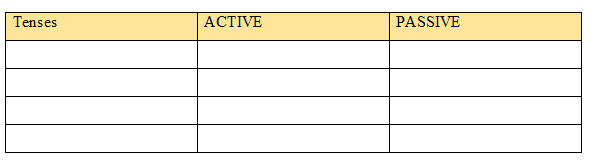
b.- Write the main verb in the four other tenses in the active and passive present systems.
Observaciones y contexto
Cornelia was the first of many female representatives of epistolary production whose texts are not preserved. They are only known because they are referenced by their recipients. The letters had a private purpose and their authors are related to the protagonists of Roman history from the 1st century BC and to the imperial court. According to Aurora López (No solo hilaron lana, 2004) they are: Servilia (mother of Brutus), Pilia and Caecilia Attica (wife and daughter of Atticus), Terentia and Tullia (wife and daughter of Cicero), Publilia (second wife of Cicero), and Fulvia (wife of Mark Antony). Related to the emperor are his mother Acia, his sister Octavia the Younger, his daughter Julia the Elder, and his wife Livia.
The four activities on morphology about Letter 1 of Cornelia can be carried out separately or together in a session with four interactive groups to review morphology. Here is a suggested sequencing for a 55' lesson:
5’. Explaining the lesson.
15’. In the first activity, corresponding to each group, they will read the fragment in latin and its translation and they will answer the questions.
10’. Reading the text is not necessary for the following exercises, they only have to answer the questions. Consequently, the timing for each sheet will be 10', a total of 30'.
5’. The students will pose questions regarding morphology and they can make suggestions to improve activities.
This activity has been suggested for Latin in 4th of ESO, the subject in secondary education that includes a block of morphology.
Descripción
Reading Fragment 1 of Cornelia in Latin and translated and answering questions regarding gender and number.