Another woman in the same war
Characters:
Theme: Relevant women
Competencies
Competence in Linguistic Communication
Personal, social and learning to learn competence
Competence in cultural awareness and expressions
Subjects and year by Educational System
Spain > Classical culture > 2nd ESO > Classical roots of today's world. History and socio-political evolution
Enunciation

Artemisia of Halicarnassus was born in the currently known as Bodrum (Turkey), and was the tyrant of the region of Caria (Asia Minor). She commanded a small fleet of five ships with which she joined the Persian army of the Great King Xerxes I in his expedition against the Greeks in the Second Persian invasion of Greece. She fought at the head of her troops and led them in the battles of Artemisium and Salamis.
Look up information about Hydna of Scione and answer the questions.
- She is also known by another name. Which one?
- Which side was she on, the Persian or the Greek?
- Was she also in the military?
- What did her feat consist of?
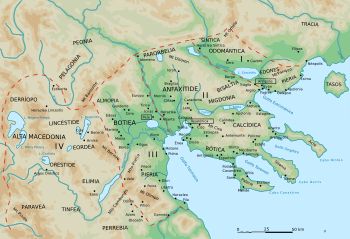
- Scione was an ancient city on the peninsula of Pallene, in an area called Chalcidice, in Thrace. Locate it on the map and mark it

Observations and context
Other famous rulers were the also famous Artemisia II (4th century BC), who, when widowed by her husband Mausolus de Caria (377 – 353 BC), ordered the construction of a grandiose and spectacular funerary monument in his honour, considered one of the seven wonders of Antiquity: the Mausoleum of Halicarnassus; Cleopatra Philopator (1st century BC), queen of Egypt, or Zenobia of Palmyra (3rd century AD). Of these, Cleopatra and Zenobia also commanded their armies, in this case against the Romans, and they were joined by others, such as Boudica, queen of the Iceni, who led several British tribes against the Romans.
Description
Artemisia of Halicarnassus was not the only woman to participate in the Second Persian invasion of Greece. There was another one on the Greek side, even though there is not much information about her: Hydna of Scione. Students are asked to do research on this woman and answer questions about her.
Data collection, reflection, information search.