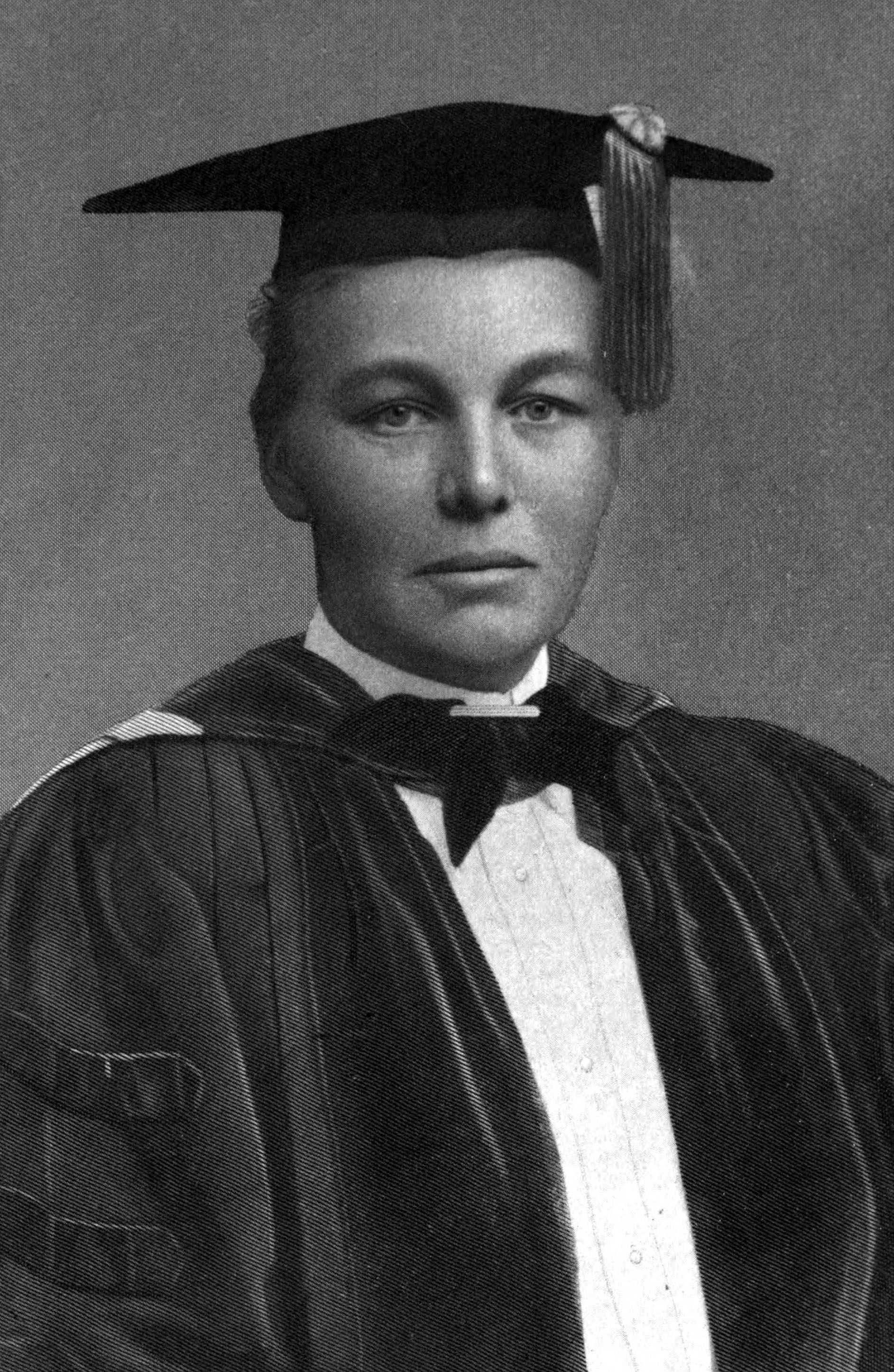
Personatge
Retrato

Ida Helen Ogilvie

New York City, 1874 — Germantown (New York), 1963  

Període d'activitat: 1903 — 1960

Classificació geogràfica: Amèrica > Estats Units

Moviments socio-culturals

Grups per àmbit de dedicació

Científiques > Geólogues / Geofísiques

Context de creació femenina

Geology was a predominantly male-dominated field, but from the late 19th century a group of women dedicated their lives to it.

Ida Helen Ogilvie (1864-1963) was a disciple of the pioneering geologist Florence Bascom (1862-1945), who put a generation of women into careers in geology, including Katia Kraft, who devoted her life to volcanoes; Mary Tharp, creator of the first map of the ocean floor or Marie Morisawa, geomorphologist, promoter of a renewal in her field and initiator of environmental geomorphology, Katia Kraft who developed her career as a volcano researcher, taking her to travel the world in search of dangerous volcanic eruptions, Etheldred Benett, expert in fossils, who was admitted in 1836 as a member of the Imperial Society of Natural History in Moscow, thinking, given his name, that he was "an Englishman expert in fossils". When it was discovered that she was a woman, it almost created an international problem. We can also mention Dorothea Bate, who travelled alone to remote sites and, when she needed help, hired local men as guides and interpreters. Between 1901 and 1911, she explored the mountainous areas of Crete, Cyprus and the Balearic Islands, finding fossils of pygmy elephants and hippopotamuses in the first two, and Myotragus balearicus in Mallorca, or María Gordón, who explained how the mountains of South Tyrol in the Alps had been formed. All of them were pioneers and great

Ressenya

Ida Helen Ogilvie graduated in Zoology and Geology from Bryn Mawr College in 1900, and received her Ph.D. from Columbia University three years later. Then, she was hired by Barnard College, where she taught for much of her life, becoming a full professor in 1938 and the first woman to teach Geology at graduate level in a major university. As has been said, in addition to her teaching and research work, she stands out for her involvement in the Women's Land Army civil initiative.

Activitats

Justificacions

  • She was a renowned American geologist.
  • She helped to understand the composition of lava and the effect of aridity on erosion processes.
  • She was the second woman to belong to the Geological Society of America.
  • She participated in the Women's Land Army, initiative that sought to get women to solve the problem of labor shortages suffered by the agriculture and livestock sectors during the First World War.

Biografia

Ida Helen Ogilvie was a renowned New York geologist. She was born into a family of wealthy artists and was able to get her doctorate from Columbia University, with her remarkable thesis based on the geological mapping of the Paradox Lake Quadrangle of the Adirondack Mountains of New York. Her passion for Petrology led her to visit distant places and to become fond of mountaineering, for which her peers considered her a fearless and adventurous woman. However, she ended up specializing in Glacier Geology, a field that aroused less enthusiasm among geologists, but which helped her stand out in a very masculinized environment. In addition, she made contributions to other branches of geology, such as volcanology. Unfortunately, the First World War ended up separating her from her career as a researcher, as she was absorbed by the exciting project of the Women's Land Army. However, this never distanced her from her teaching work. Her professional career made her the second woman to belong to the Geological Society of America. Furthermore, she was also a member of other important associations such as the American Association for the Advancement of Science or the New York Academy of Sciences. She died at the age of 89 in October, 1963, in Germantown.

Obres


Enfocament Didàctic

Biology-geology of 1st and 3rd of ESO. Block: Ecology and sustainability 

Documents