Other women with Viria.
Personatges:
Tema: Placing the Roman civilization geographical framework on a map.
Competències
Competència en Comunicació Lingüística
Competència personal, social i aprendre a aprendre
Competència en consciència i expressions culturals
Matèries i cursos per Sistema Educatiu
Espanya > Llatí > 4t ESO > El present de la civilització llatina
Enunciat

Viria Acte, born in Valentia Edetanorum, present-day Valencia, ca. the year 90 A.D., was an extraordinary woman who, having been a slave, became a successful businesswoman. She was the owner of a statue workshop that she run herself and that became very prestigious. She received many compliments and honours due to her work and her contributions to the city of Valencia.
She is not the only woman that we are aware of in this context. Epigraphy has allowed us to learn about many other women from the same period and others, what they did and where they were born or lived. They are spread throughout the Hispanic territory.
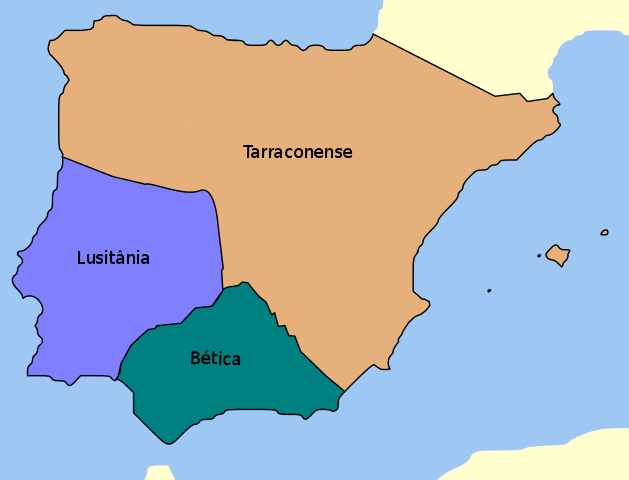
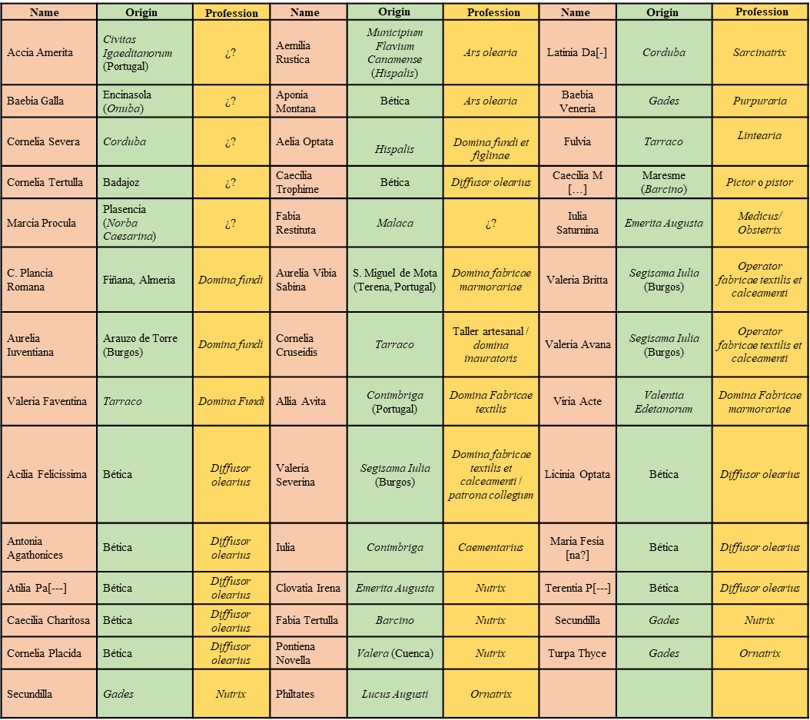
1- Based on the information provided in the attached tables, write the names of these women on the map in the corresponding places.
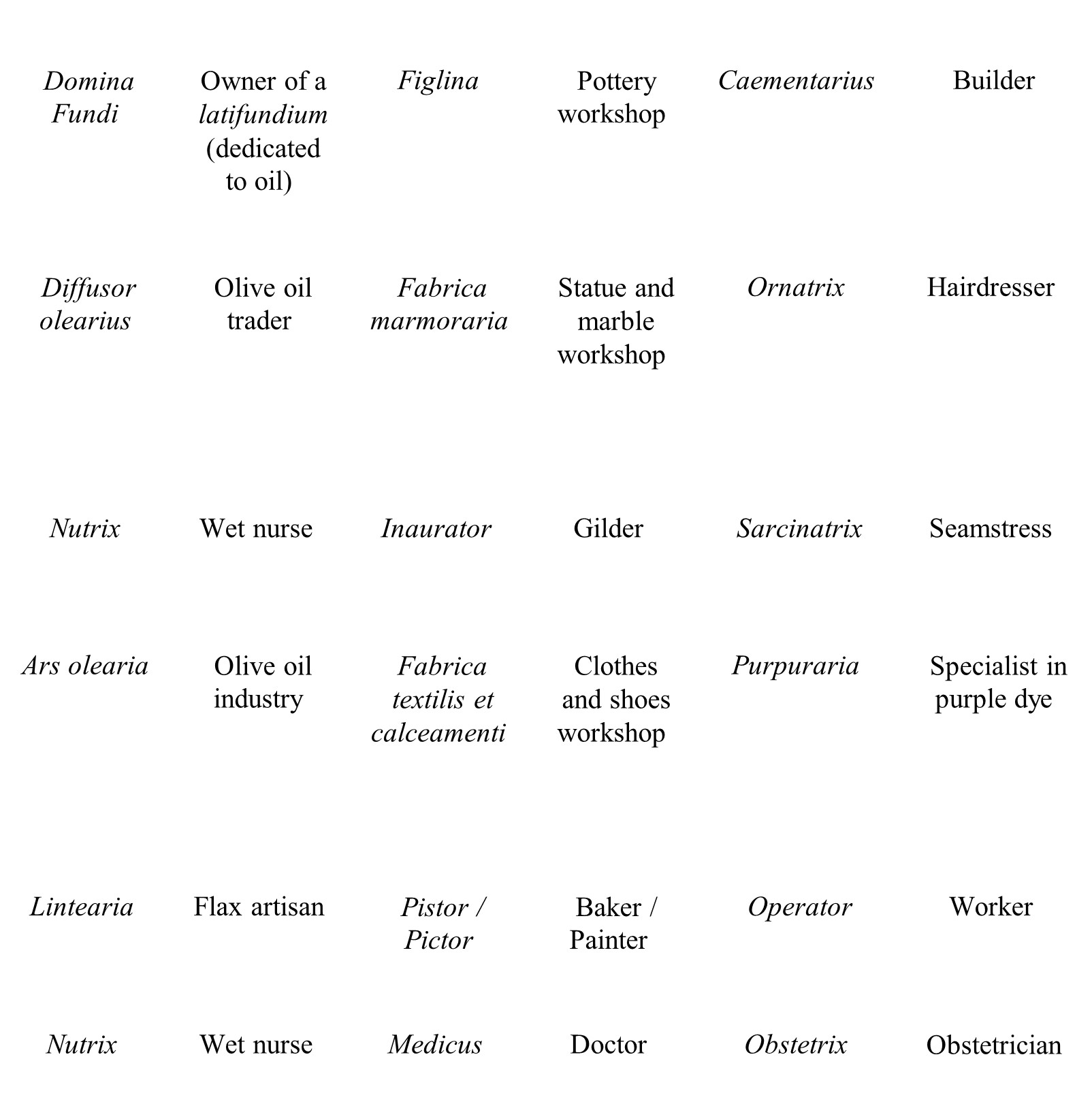
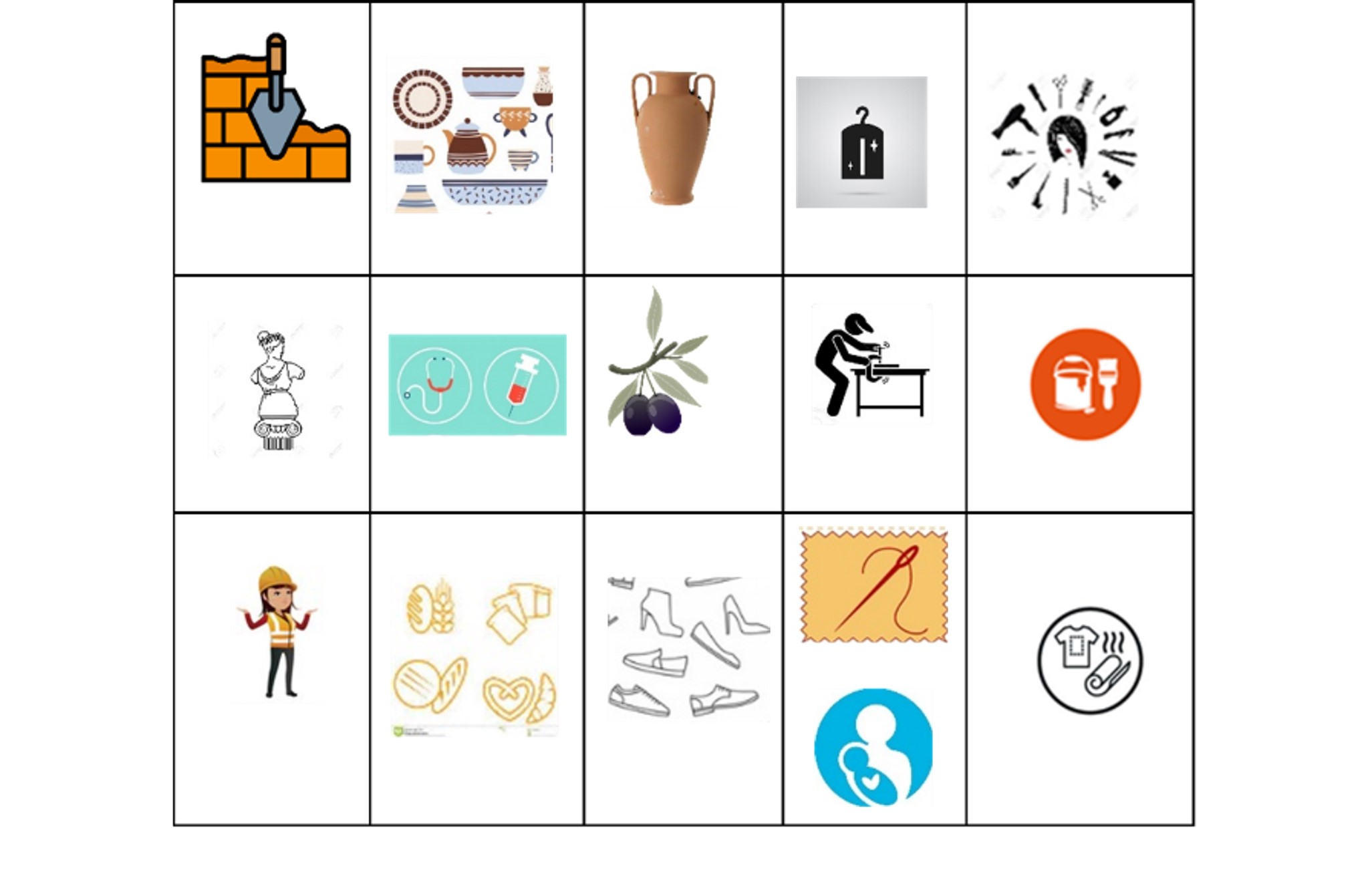
2- Cut out and paste the icon corresponding to the economic occupation that each of these women carried out. Paste it in the appropriate place.
The division of Augustus. 27 B.C.
In 27 B.C., Augustus divided Hispania into three provinces, subdivided into conventus iuridicus: Tarraconensis, with its capital at Tarraco; Baetica, with its capital at Corduba (Cordoba); Lusitania, with its capital at Emerita Augusta (Merida).
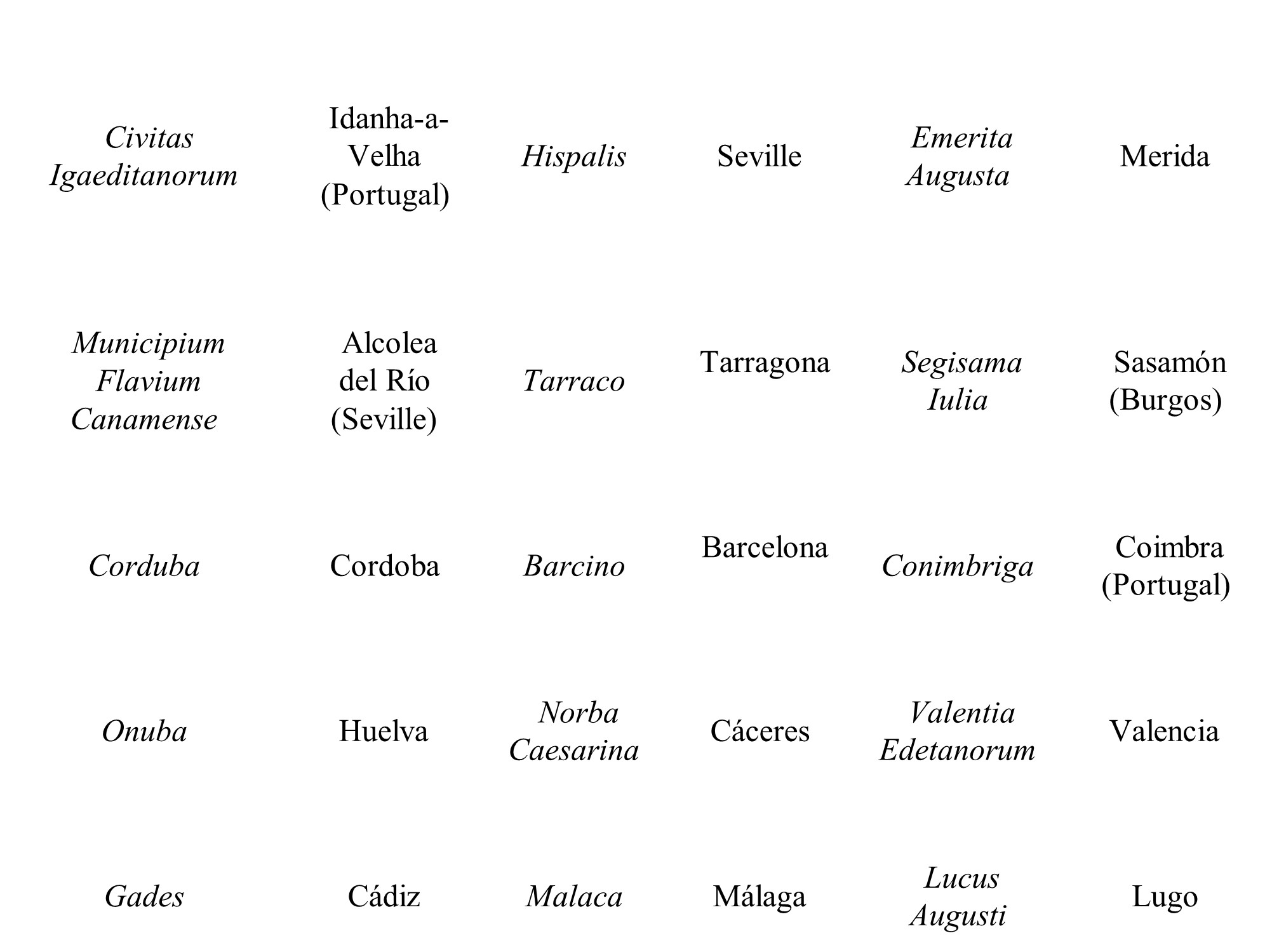
1- Refer to the tables provided and write on the map the name of each of the women in the corresponding place.

LATIN TOPONYMS
2- See the table below to find out to which professions each of the Latin names correspond. Select, cut out and paste (or draw yourself) the icon corresponding to the economic occupation of each of these women. Paste it in the corresponding place.
PROFESSIONS
ICONS
Answer the questions:
1- What is the most common activity or activities?
2- Where do they mostly occur?
Observacions i context
1- Observations
Viria Acte, a Hispano-Roman woman of the 2nd century A.D., was born in Valentia, in Tarraconensis. There are many more women spread throughout the Hispanic territory that we are familiar with because of epigraphy. With this activity, we aim to locate them geographically.
This activity should be completed with those also linked to Viria Acte, Viria’s Hispania and Remains of the past, which refer to the distribution by territory of other women in 2nd century Hispania whose names and occupations are provided by epigraphy, the distribution of Romance languages, and the archaeological remains of the Iberian Peninsula that we link to the place of origin of these women.
All of them are designed, like this one, for the 4th year of ESO in the subject of Latin as an approach to the geographical study of Roman Hispania.
2- Context
One of the key factors which led to the greater independence of Roman women in the Imperial period was their ability to own and manage their own money.
The epigraphy of Roman Hispania in the 2nd century offers numerous examples of professions carried out by women who were also, in some cases, owners of their own businesses. To cite just a few names, we can find wet nurses (nutrices), such as Secundilla (Gades) or Clovatia Irena (Emerita Augusta); hairdressers (ornatrices), such as Philtates (Lucus Augusti, Lugo) or Turpa Thyce (Gades); menders (sarcinatrices), such as Latinia Da[.... ] (Corduba); professionals related to the production, dissemination and trade of olive oil, especially in Baetica, such as Accilia Felicissima, Caecilia Charitosa, Cornelia Placida or Caecilia Trophime, among many others; owners of land in production, such as C. Plancia Romana (Fiñana, Almería) or Aurelia Iuventiana (Arauzo de Torre, Burgos); owners of artisan workshops of all kinds _from gilding, textile and footwear workshops to the manufacture of marble pieces, like our Viria Acte _, such as Aurelia Vivia Sabina (domina fabricae marmorariae) (Terena, Portugal), Cornelia Cruseidis (domina inauratoris) (Tarraco) or Valeria Severina, who was also patroness of the guild, (domina fabricae textilis et calceamenti) (Segisama Iulia, Burgos) to women who practised medicine and obstetrics, such as the Hispanic Julia Saturnina (Emerita Augusta) or later women, such as those belonging to other times and places, Primila, Empiria and Venuleya Sosis, qualified as medici; Salustia Ateneis, obstetrix; Naevia Clara, medicaphilologa or Aurelia Alexandra Zozima, cited ‘for her medical knowledge’.
We also find other professions: caementarius (bricklayer): Iulia (Conimbriga, Coimbra); purpuraria (manufacture of purple): Baebia Veneria (Gades); lintearia (weaver or linen merchant): Fulvia (Tarraco); pictor or pistor (painter or baker): Caecilia M [...] (Maresme, Barcino), etc.
Descripció
To study in depth the territorial distribution of Hispania in the 2nd century in order to obtain an overall view of the presence and contribution of women to the economy in this period.
To locate on the map of 2nd century Hispania the names of the women listed in the attached table, according to their place of origin, and the icon representing the different economic activities carried out by these women.